Last Updated: October 16, 2026
Last Updated: October 16, 2026





-Abhishek Vij
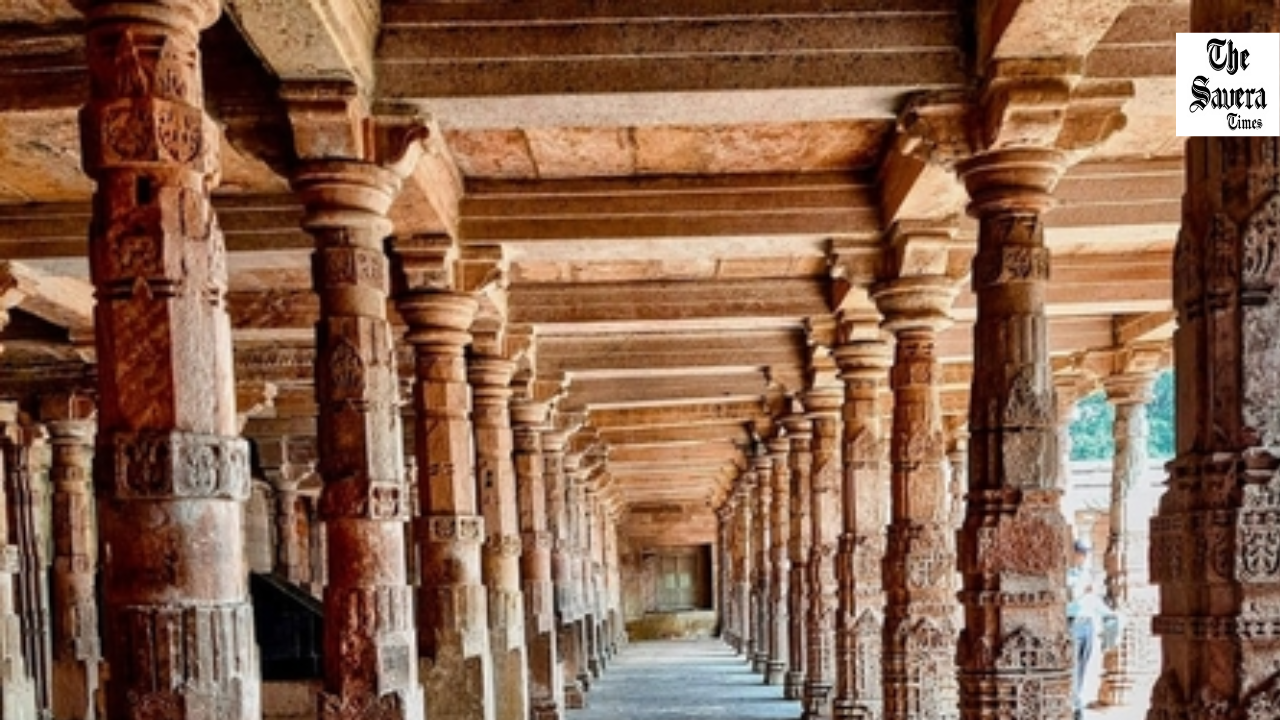
The lawsuit, which had been contested for 121 years, has finally reached a verdict. This judgment is being accorded the same significance as was given to the Babri Masjid dispute, which had remained unresolved for an even longer period. Furthermore, the very same principle under which that previous verdict was delivered has now been applied to declare Bhojshala—unequivocally—as a temple. Consequently, the offering of “Namaz” (prayers) within the structure currently operating under the name ‘Kamal Maula Mosque’ has been halted, and the Muslim community has been advised to secure a separate location for their worship. Coinciding with this verdict, the recitation of the “Hanuman Chalisa” commenced at Bhojshala, and rituals of worship and adoration have begun. A decision has also been taken to initiate the repatriation of the idol of Goddess Saraswati, which is currently housed in a museum in England. Delivering this historic verdict, the Madhya Pradesh High Court declared that this historical and protected site is, in fact, a temple dedicated to Goddess Saraswati. The arguments presented by the mosque’s petitioners—who had asserted their legal ownership and sought a verdict in their favor under the provisions of the Places of Worship Act, 1991—were dismissed by the Court. The Court ruled that this specific legislation does not apply to protected heritage sites and upheld the principle of “Once a temple, always a temple” in this context. In doing so, the Court cited the precedent set by the verdict delivered regarding the Shri Ram Temple in Ayodhya. The Court further observed that the mere utilization of a site by one community does not automatically extinguish the religious rights and practices of another community. Historically, this Bhojshala— located in Dhar (near Indore)—is believed to date back to the period between the 9th and 14th centuries. It was originally established by King Bhoja to serve as a grand university and a sanctuary for the patronage of artists and litterateurs. While it once boasted a glorious cultural history, it was subsequently desecrated by Muslim invaders; they vandalized the structure, utilized its inscribed stone slabs as flooring, and repurposed the site into a mosque. Although “Namaz” was regularly offered within the mosque, members of the Hindu community would also visit the threshold to offer their obeisance to Goddess Saraswati before departing. When the dispute eventually escalated, the Department of Archaeology and History intervened to conduct a comprehensive investigation into the matter. It cited the presence of 82 ancient pillars, beams, remnants of sculptures, a hundred columns, inscriptions bearing the salutations “Saraswateya Namah” and “Om Namah Shivaya,” symbols of deities etched onto the pillars, evidence of idols having been defaced or mutilated, and inscriptions written in Sanskrit. In 2024, the Archaeological Survey of India (ASI) conducted a 92-day survey of the site, during which idols, pillars, coins, and inscriptions were discovered. The existence of the Bhojshala predates the current structure. Indeed, stones originally belonging to the Bhojshala have been incorporated into the mosque itself. Incidentally, Islamic law explicitly prohibits the construction of a mosque on land acquired through coercion. However, throughout Indian history—from the era of Muslim invaders like Alauddin Khilji to that of Aurangzeb—this very practice persisted: demolishing temples to erect mosques in their place. In this same vein, a vast cultural complex in Dhar was similarly converted into a mosque. In this new era of cultural renaissance and historical inquiry, the restoration of the temple dedicated to Mother Saraswati at the Bhojshala continues to hold immense significance for the nation’s cultural enthusiasts. Consequently, not only have the common people of the country—but also its artists and intellectuals—regained access to their ancient place of worship. Undoubtedly, the political significance of this development is selfevident. Assembly elections are imminent in Uttar Pradesh. Just as Yogi Adityanath reaped political dividends from the construction of the Ayodhya temple during the previous elections, the restoration of the Vagdevi temple in the Dhar region is expected to once again consolidate the Hindu vote bank. This consolidation of Hindu voters, catalyzed by the revival of the temple, is lik
Amid the ongoing protests, investigators have found that certain elements backed by Pakistan launched a multi-layered digital warfare...
~Dr M L Jat India has moved from food scarcity to record harvests. The next leap is from...

Smartness is the key to getting ahead in life. Whether it is the mastery of job skills or...

Varanasi: A massive explosion triggered the collapse of a two-storey building in Uttar Pradesh’s Varanasi on Thursday, leaving...
Sofia: A vessel sailing under the flag of San Marino caught fire in the Black Sea near Romania...

New Delhi: Accusing the Congress of double-speak on women dignity, the Bharatiya Janata Party (BJP) Mahila Morcha on...
Aries: The day will be auspicious...