Last Updated: October 7, 2026
Last Updated: October 7, 2026





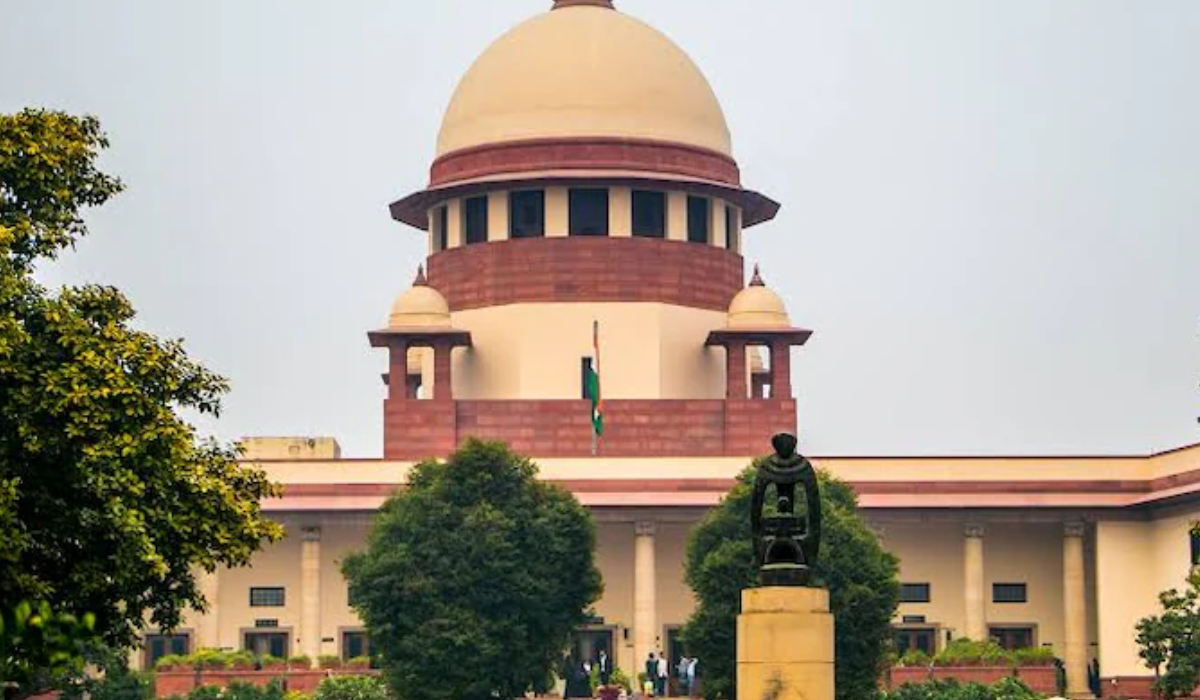
The Supreme Court’s refusal to pass an interim order against Chief Election Commissioner Gyanesh Kumar has put the controversy surrounding the Special Intensive Revision (SIR) of electoral rolls in a different perspective. On October 5, the Supreme Court declined to suspend the CEC over allegations that important decisions relating to the SIR were taken without the concurrence of the other two Election Commissioners. The petitions relied largely on a media investigation. A Bench headed by Chief Justice of India Surya Kant, along with Justices JoymalyaBagchi and V. Mohana, issued notices to the Election Commission of India, the CEC and the other Election Commissioners. However, the Court was not willing to act on the allegations without examining the official record. It made it clear that a newspaper report alone could not be the basis for passing an order against a constitutional authority. That observation is important because the issue is not simply about what has been reported, but about what the records actually establish. The Court noted that a news report could be completely correct, partly correct or partly incorrect. The Bench, therefore, chose to seek the original material before reaching any conclusion. The Election Commission has maintained that differences of opinion and observations in internal files are part of the normal process of deliberation. According to the Commission, final decisions relating to the SIR were taken with the approval of the full Commission. The presence of differing views in internal discussions, therefore, cannot by itself be treated as evidence of an institutional breakdown or unilateral decision-making. There is also an institutional issue at stake. Suspending the head of the Election Commission without first hearing the institution could have consequences for the functioning of a constitutional body responsible for conducting elections. The Court has, however, left the issue open. If the records eventually establish that a decision was taken without the required unanimity or majority, appropriate judicial intervention remains possible. The controversy also extends to Form 6 and the additional declaration required during the SIR. In its September 26 press note, the Election Commission said that the declaration attached to Form 6 for the SIR had been upheld by the Supreme Court. Critics subsequently pointed to the Court’s observation that it had not upheld any “modification” of Form 6 and alleged that the ECI had therefore misrepresented the judgment. The dispute, however, turns on the distinction between modifying Form 6 and requiring an additional document along with it. Form 6, prescribed under the Registration of Electors Rules, 1960, remains the statutory form for inclusion of a name in the electoral roll. The ECI’s clarification says that the Commission did not alter the form itself. Instead, in the context of the SIR, a new voter was required to submit Form 6 along with a separate declaration in Annexure D. In other words, the Commission’s position is that the form was not changed; an additional declaration was required to accompany it. That distinction is central to its defence of the September 26 press note. The Commission has also relied on the Supreme Court’s reasoning that a Special Intensive Revision is different from the routine revision of electoral rolls. While Form 6 provides the standard documentation framework, the Election Commission retains residual authority to prescribe additional documents suited to the requirements of an SIR. According to the ECI’s clarification, the Court also upheld the documentation regime as a valid exercise of administrative discretion. The requirements were found to be based on rational criteria linked to the objective of protecting the integrity of electoral rolls, rather than being arbitrary or illegal. The ECI’s clarification states that the Court recognised the requirement of the declaration, acknowledged the Commission’s residual authority to prescribe documentation for an SIR and upheld the documentation framework as a valid exercise of administrative discretion. The political debate around the SIR is unlikely to end with the latest Supreme Court proceedings. But the Court’s approach has established an important threshold: allegations concerning the functioning of the Election Commission will have to be tested against evidence and official records. The Court has neither accepted the allegations against the CEC nor closed the door on them. It has chosen to examine the record before reaching a conclusion. Similarly, the Form 6 controversy cannot be understood simply through competing political claims. The distinction between changing the statutory form and requiring supporting documentation is central to the issue. At the heart of the controversy is the integrity of electoral rolls. The SIR is intended to identify and address ineligible, duplicate and nonexistent entries. At the same time, any exercise involving electoral rolls must be transparent and capable of withstanding scrutiny.
On October 7, 2026, Narendra Modi completes 25 years as the head of a government. This journey in...
El Nino and warming in the tropical Atlantic could help provide early warning of extreme heat in the...

Prime Minister Narendra Modi marks 25 uninterrupted years in public executive office on Tuesday, October 7, establishing a...
It has been almost two years since the Aam Aadmi Party government in Punjab has been enthusiastically launching...

The controversy over the Special Intensive Revision of electoral rolls raises legitimate questions. But political parties cannot demand...
Currently, very optimistic data is emerging about India’s economic growth rate. Crisil has also recently stated that India...

Aries: The day will be auspicious...