Last Updated: October 20, 2026
Last Updated: October 20, 2026





RC Sharma
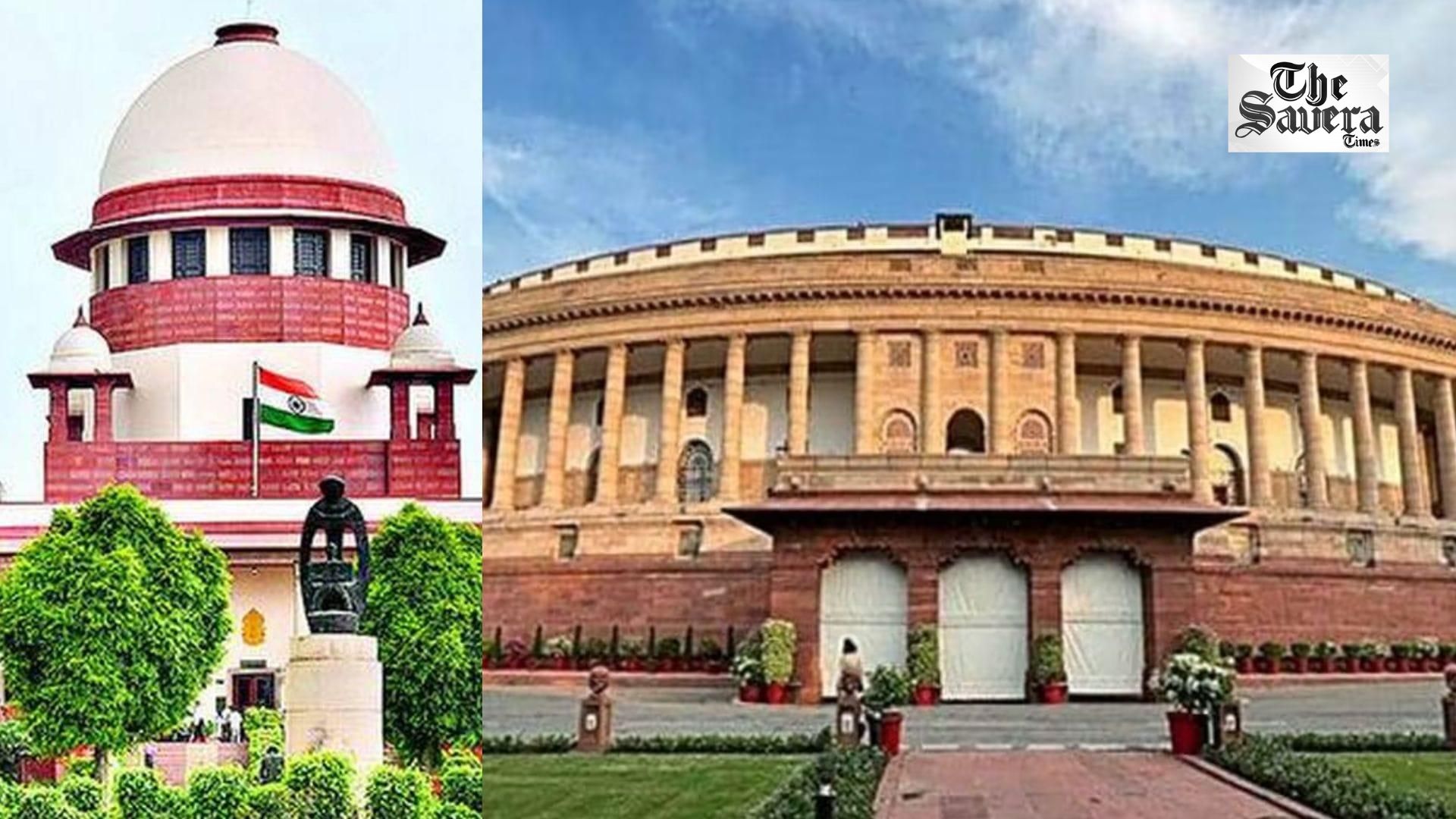
Executive, legislature and judiciary are the three pillars of governance interwoven to follow constitution and protect democracy. Separation of powers concept delinks them from each other to protect constitution and serve people. Three diametrically distinct organs of governance are constitutionally bound to maintain dignified space from each other for functional autonomy essential for vibrancy of democracy.
Cozying up, uncalled familiarity is depleting public trust in institutions obligated to protect constitution and democracy. Executive, legislature, judiciary and election commission, all have distinct role in parliamentary democracy. Depleting and blurring institutional identity are death knell for democracy. Prime casualty of cozying up is separation of powers concept.
High time institutions start respecting integrity of each other to prevent centralization of power, democratic backsliding making one overbearing, supreme back benching constitutional norms. In the historical perspective, Aristotle, John Locke and Baron de Montesquieu in order of precedence, invented and refined the concept of separation of powers. It is Montesquieu who institutionalized classic doctrine “Trias Politica” calling for separate executive, legislature and independent judiciary.
In USA, the Bill of Rights, 1791 codified first ten amendments to US constitution, to protect individual liberty and prevent state tyranny. The 2 nd amendment protects the right of people to keep and bear arms. It says “A well-regulated militia, to the security of free state, the right of people to keep and bear arms, shall not be infringed”. This continues today despite many shootings taking place regularly, the individual liberty to have arms continue. The 4 th amendment says “The right of the people to be secure in their persons, houses, papers, and effects, against unreasonable searches and seizures, shall not be violated, and no warrant shall issue, but upon probable cause, supported by oath or affirmation, and particularly describing the place to be searched, and persons or things to be seized”.
It puts check on agencies going gaga for searches with little accountability. In all functional vibrant democracies separation of power is treated as pious pledge and virtue, adhered to keep democratic space vibrant with no place for discrimination based upon region, religion, caste and ideology. The concept of separation of powers was widely debated in constituent assembly and forms part of constitution with total separation between judiciary and other two organs i.e. legislature and executive and mild separation cum checks and balances between executive and legislature. In our national context, the separation of powers and checks and balances concept has almost collapsed.
Biggest casualty of collapse of separation of powers cum checks and balances concept has been legislature. An analysis of PRS Legislative research data, in the current monsoon session from 20 July to 13 August,26, the productivity of Lok Sabha was 15 (fifteen percent) and Rajya Sabha 33 (Thirty three ) percent. The session was marked by disruptions with all important bills passed without discussion. Disruptions also affected question hour which functioned only for 01(one percent) of scheduled time in Lok Sabha and 12 (twelve) percent of scheduled time in Rajya Sabha. Out of 11(eleven) bills passed in the current monsoon session in Lok Sabha, 09(nine) bills were passed without discussion with zero participation from members.
The public examinations (Prevention of unfair means) Amendment bill only saw discussion for ten hours and fifty-four minutes and participation of 48 Lok Sabha MPS. The prevention of Insults to National Honour (Amendment) bill was passed in 14 minutes and saw participation of two MPs. Rajya Sabha fared a bit better. Passing bills without discussion, giving go by to committee system to scrutinize bills and suggest amendments and in-depth discussion after that in the houses has become a thing of past. In the separation of powers and checks and balances concept parliament seems to have been overwhelmed by executive, diluting and diminishing the most important pillar of Indian democracy, the house of people. The committee system has almost become redundant reducing legislative importance and oversight over the bills. In the current session agenda listed only two bills for passing. These were Vikshit Bharat Siksha Adhistan (VBSA)bill 2025 and the foreign Contributions (Regulation) Amendment (FCRA) bill 2026.
The committee report on VBNSA bill 2025 has not been presented and FCRA bill stands referred to JPC. The proportion of bills referred to committees during 16 Lok Sabha was 28 percent ,16 percent during 17th Lok Sabha and 21 percent during 18 th Lok Sabha. It is an example of diminishing institutional importance of legislature wherein executive bulldozes through its agenda undermining legislative propriety and procedures for passing of bills. Vidhan Sabhas has fared no better in sittings.
Himachal Pradesh Vidhan held 19,31 and 27 sittings in 2022,2023 and 2024 respectively, whereas Punjab Assembly met for 14,12 and 10 days during the corresponding period. Haryana assembly met for 17,14 and 13 sittings between 2022 and 2024. Clear deduction can be arrived at, that parliament and legislature have become hostage to executive dominance, a pawn between executive and people. Thus, primary responsibility for making good laws after through and in-depth analytical debate and discussion stands totally eroded.
Disruptions and noise are new form of protest for opposition and ruling parties. Both resort to measure wiping out whole sessions and trend continues since nineties justified by Late Arun Jaitley and Sushma Swaraj as legitimate tactic. It is high time political parties, executive and legislature introspect and restore credibility of Parliament as people’s institution meant for debates and not disruptions. Judiciary is empowered to interpret and protect constition. Judiciary, once considered citadel of independence and strict follower of separation of powers concept, seems to have faltered.
Public trust in judiciary and constitutional courts is slowly eroding with growing backlog of cases, litigation commercialized, out of reach of common man, upright sidelined in judicial appointments despite the fact that India being only country where judges of constitutional courts appoint other judges. The case of Justice S Muralidharan and Justice Akil Kureshi mark a chapter in India’s history of executive interference in judicial appointments.
Separation of power concept seem punctured considering how executive and judiciary relations are perceived by citizens today. Slight friction between executive and judiciary good for democracy is missing. No system is good or bad, it is those obligated to operate the system make it excellent, good or bad. The institution is slowly dismantling itself not under any outside pressure but because of inadequacies of those who constitute system. Judiciary had power of judicial review to strike down parliamentary acts contrary to constitution as also executive actions against constitutional norms. The power in last two decades have not been used except striking down National judicial appointment commission Act which concerned with appointments of judges of constitutional courts and was to replace collegium system of appointments.
In the present CAPF (General Administration) Act 2026 is under challenge and a test case for judicial sagacity. Judicial response in such cases has been inadequate or deficient. Judiciary is seen more as extended arm of executive with new concept of judicial assistance emerging for “SIR” exercise in West Bengal with judicial officers involved in exercise, the exclusive domain of election commission.
Good Evening Viewers! Catch up on the day’s top headlines with The Savera Times Evening Bulletin, bringing you...

The Delhi High Court has quashed the Central Information Commission's (CIC) order to make public the records of...
The judicial custody of Cockroach Janata Party (CJP) leaders Ashutosh Ranka and Saurav Das was extended by two...
Three people were killed and several others injured in separate incidents in Imphal East and Thoubal districts of...

A controversy erupted during Punjabi singer Daler Mehndi's live performance in Uttarakhand's Tehri Garhwal district. Daler Mehndi, who...
Jamia Millia Islamia (JMI) has formed a seven-member committee to negotiate with students protesting for the reinstatement of...
Aries: The day will be auspicious...