Last Updated: September 27, 2026
Last Updated: September 27, 2026





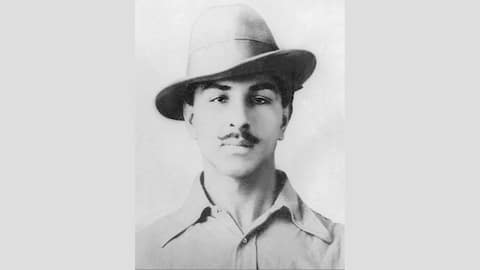
Among the countless heroes lives for India’s freedom, Shaheed-e-Azam Bhagat Singh occupies a unique place. As on record he was born on 27 September 1907, he remains one of the most revered national heroes of India. His courage, patriotism and supreme sacrifice have inspired generations. Yet, while most Indians remember him as the fearless revolutionary who embraced the gallows at the age of 23, fewer appreciate the depth of his intellect, the strength of his character and the seriousness of his scholarship. The real Bhagat Singh was not merely a martyr; he was an exceptional student, a disciplined young man, a thinker, a social reformer and a visionary who consciously sacrificed a brilliant personal future for the freedom of his country.
A widely circulated copy of his Class VIII school certificate, issued by the Government Middle School, Lahore, and dated 15 April 1919, provides a fascinating glimpse into the formative years of the young boy who would later become one of the greatest icons of India’s freedom struggle. The document is far more than an educational record. It offers an early portrait of the intellect, discipline and character that would eventually produce Shaheed-e-Azam Bhagat Singh.
According to the certificate, Bhagat Singh, son of Sardar Kishan Singh, secured 727 marks out of 950 and passed in the First Division. His date of birth is recorded as 28 September 1907, according to the school admission register. His subject-wise marks were: English 72 out of 100, Hindi 78, Punjabi 80, History 85, Geography 76, Arithmetic 88, Science 75, Drawing 80, Gymnastics and Drill 45 out of 50, and Conduct 48 out of 50. The certificate grades his performance as Good, Very Good or Excellent across all these areas.
A closer examination of these marks reveals several remarkable aspects of his personality. His highest academic scores were in Arithmetic and History, both graded “Excellent”. This combination is particularly significant. Arithmetic reflects logical reasoning, precision, planning and analytical ability, while History reflects curiosity about society, nations, political struggles and the forces that shape human destiny. Together, these subjects point towards a mind capable of both intellectual analysis and historical understanding. It is perhaps no coincidence that the future revolutionary became one of the most thoughtful political thinkers of his generation.
Most remarkable, however, are the 48 marks out of 50 awarded for Conduct. This may be the most significant entry on the entire certificate. It indicates that his teachers regarded him as disciplined, responsible and well behaved. The British Government later considered him a dangerous revolutionary, but his teachers had recorded his conduct as “Very Good”. The certificate therefore reminds us that Bhagat Singh’s rebellion was not against morality or social order; it was against injustice, oppression and foreign domination.
Another important observation is that there is no weak subject on the entire certificate. Every subject is graded either Good, Very Good or Excellent. This reflects a balanced personality. He was not merely an academic achiever. He combined intellectual ability, linguistic competence, physical discipline, creativity and ethical conduct.
The certificate also challenges the assumption that revolutionaries were people who had failed to succeed in ordinary life. Bhagat Singh’s academic record indicates that he could have pursued a successful professional career in British India. He might have become a lawyer, professor, journalist, scholar, administrator or civil servant. His decision to join the freedom struggle was therefore not a consequence of limited opportunities. It was a conscious sacrifice of personal success for national liberation.
His nationalism was rooted in a family environment of patriotism and public service. He grew up in a patriotic Sikh family. His father, Sardar Kishan Singh, and his uncles, Sardar Ajit Singh and Sardar Swaran Singh, were actively associated with the struggle against British rule. National service was therefore part of the atmosphere in which the young Bhagat Singh was raised.
The Jallianwala Bagh massacre of 1919 profoundly influenced his young mind. The brutality of British rule convinced him that political freedom was essential for human dignity and national honour. Yet his response was not limited to anger. He turned increasingly towards books and study. Throughout his short life, he remained a passionate reader.
An important aspect of Bhagat Singh’s life that deserves greater attention is his relationship with Sikh history and the political environment of Punjab. He was deeply influenced by the ideals of courage, sacrifice, resistance to tyranny and service to humanity associated with the Sikh tradition and the teachings of Guru Gobind Singh Ji.
During the Sikh Gurdwara Reform Movement of the 1920s, young Bhagat Singh assisted Akali volunteers engaged in the struggle to free historic Sikh shrines from corrupt Mahants who enjoyed British support. He sympathised with their cause and participated in activities connected with the movement. His involvement brought him to the attention of the colonial authorities, and warrants for his arrest were reportedly issued.
This chapter of his life is significant because it demonstrates that Bhagat Singh was not detached from Sikh concerns. He recognised that the struggle for religious freedom and the struggle for political freedom were closely connected. The courage displayed by the Akali reformers left a lasting impression upon him.
The Sikh institution of Langar had long symbolised equality and human dignity, where people sat together irrespective of caste, wealth or social status. Bhagat Singh admired traditions that promoted fraternity and collective identity. His vision of India was one in which barriers of caste and discrimination would gradually disappear.
The Naujawan Bharat Sabha, which he helped establish, sought to create disciplined, enlightened and courageous youth committed to national liberation and social transformation. In many respects, its spirit reflected the ideal of individuals rising above narrow self-interest for a larger cause. Discipline, sacrifice, equality and commitment to the collective good were central to the political culture he sought to develop among young Indians.
One of the greatest shortcomings of contemporary education is that students know Bhagat Singh the martyr but rarely encounter Bhagat Singh the thinker. They know his slogans but not his writings. They know how he died but not how he lived, studied and reflected.
His prison notebooks reveal a young man constantly engaged in learning. Even while awaiting execution, he continued reading, writing and analysing the future of India. He understood that genuine revolution required intellectual awakening as much as political action.
For this reason, Bhagat Singh’s writings, essays, letters and prison notebooks deserve a meaningful place in educational curricula. Students should be encouraged to understand not merely the events of his life but also the ideas that shaped him.
Today, Bhagat Singh is remembered through statues, posters, rallies, anniversaries and public ceremonies. Political leaders visit Khatkar Kalan, his ancestral village, and Hussainiwala, where the National Martyrs Memorial stands. Young people wear replicas of his famous hat, while others emphasise his Sikh identity through his turbaned portraits. Such commemorations reflect affection and respect, but there is always a danger that symbolism may replace substance.
The true tribute to Bhagat Singh does not lie merely in wearing his hat, tying a turban in his style, raising slogans or organising anniversary functions. These gestures acquire meaning only when accompanied by an understanding of his ideas.
India does not need millions of people dressed like Bhagat Singh. India needs citizens who possess his courage to confront injustice, his dedication to learning, his commitment to equality, his patriotism and his willingness to place national interest above personal gain.
The old school certificate from Lahore provides a profound reminder of this truth. Before Bhagat Singh became a martyr, he was a student. Before he became a revolutionary, he was a reader. Before he became a symbol, he was a thinker.
His marks confirm his academic brilliance. His conduct marks testify to his character. His writings reveal his intellectual depth. His association with the Gurdwara Reform Movement reflects his concern for justice and freedom. His dream of a more equal society demonstrates his commitment to social transformation. His martyrdom reflects his unwavering devotion to the nation.
The greatest tribute we can pay him is not merely to remember him but to understand him. Only then will we truly honour the legacy of one of the finest minds, noblest patriots and most extraordinary sons that India.
Student protests at Lovely Professional University (LPU) in Phagwara, Punjab, intensified early Sunday morning after news of the...

Parneet Sachdev Chairman of Real Estate Regulatory Authority and a leading author Arthashastra The Special Intensive Revision (SIR)...
Flaws and weaknesses are never addressed. The biggest flaw in Indian agriculture is that its whether it’s the...
BSF and ANTF arrested two alleged smugglers and recovered 19.820 kg heroin concealed in 20 packets inside a...

A Punjab Police Inspector posted with Counter Intelligence was arrested in Ferozepur after police recovered 3.350 kg heroin,...
Navpreet Singh, husband of SAD Sarpanch Kulwinder Kaur, was shot dead outside his home in Tarn Taran. Police...

Aries: The day will be auspicious...