Last Updated: October 18, 2026
Last Updated: October 18, 2026





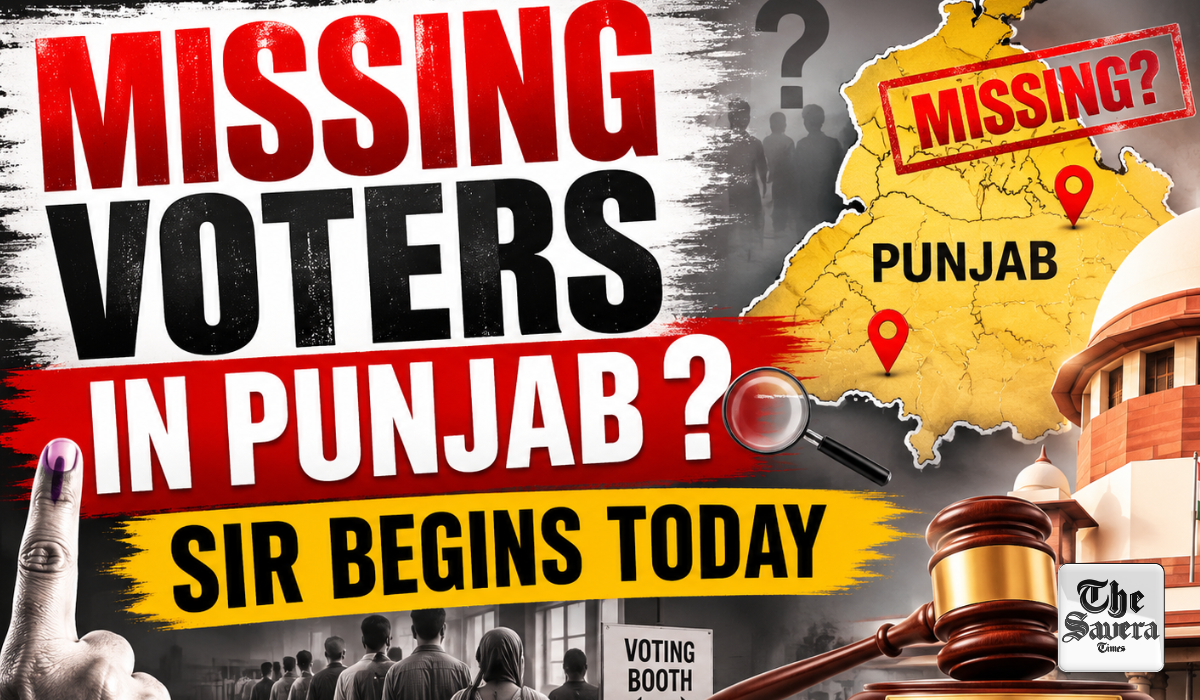
Imagine visiting a village in Punjab and hearing a familiar story. One son is in Canada, a daughter is settled in Australia, and a cousin has been living in Italy for years. Many of them left Punjab long ago, but what if some of their names are still on the state’s voter list? That is the question at the heart of Punjab’s Special Intensive Revision (SIR) of electoral rolls, which begins today.
The first phase of the house-to-house enumeration under the Special Intensive Revision (SIR) of electoral rolls starts across Punjab today.
More than 24,000 Booth Level Officers (BLOs) will visit homes to verify details of over 2.14 crore registered electors. The exercise is part of SIR Phase III, covering 16 states and three Union Territories, with Punjab’s final electoral rolls scheduled to be published on October 1, 2026.
What is SIR?
SIR is a comprehensive voter verification exercise launched by the Election Commission of India (ECI) to make electoral rolls accurate and up to date.
BLOs will distribute and collect Enumeration Forms door-to-door, verifying names, addresses, family details, mobile numbers, dates of birth and voluntary Aadhaar linkage.
The aim is simple: include every eligible voter and remove entries that are no longer valid due to death, duplicate registration or permanent relocation.
Unlike routine revisions, SIR involves physical verification on a large scale. Political parties can also appoint Booth Level Agents (BLAs) to assist in the process.
After the house visits, which will continue from June 25 to July 24, draft rolls will be published on August 3, followed by a period for claims and objections. The goal is to ensure that every eligible voter is registered only once and at the correct location.
Why is SIR launching in Punjab?
Like many states, Punjab faces challenges in maintaining accurate voter rolls. Over time, people move to different cities, migrate abroad, or pass away, while their names may continue to remain on electoral records.
The Election Commission wants to update these records before future elections and ensure that the rolls reflect the actual voting population. In a state like Punjab, where migration has shaped society for decades, this exercise could become one of the most significant voter-list verification drives in recent years.
Preparations for the exercise are already underway. Awareness camps have been organised, and BLOs have received training to carry out the verification process. Officials say public participation will be key to making the exercise successful.
The “Missing Voter” Angle: Migration and Ghost Names
This is where Punjab’s story becomes unique.
Punjab has one of the largest overseas populations among Indian states. Millions of people of Punjabi origin live in countries such as Canada, the United Kingdom, Australia, Italy and the United States. Every year, thousands more leave for education, jobs and better opportunities.
As a result, many villages have families with one or more members settled abroad. While some remain connected to their hometowns, they may no longer be ordinary residents of Punjab.
The question is: how many such names are still present in the voter lists?
Apart from international migration, many Punjabis also move to other states and cities for work. If electoral records are not updated, these names can remain on rolls despite the person no longer living there. Such entries are often referred to as “ghost voters”.
While there is no official estimate of how many such names exist, SIR is expected to identify and verify these entries through ground-level checks.
Can SIR Be the Game-Changer?
The success of SIR will depend on how effectively the verification is carried out. The exercise is designed to remove ineligible names while ensuring that no genuine voter is left out.
BLOs will verify details on the ground, and citizens will have the opportunity to correct mistakes, update information and raise objections where required.
For Punjab, the exercise could help bridge the gap between the state’s actual population and its electoral records. If done properly, it may provide the clearest picture yet of Punjab’s real electorate.
What Should You Do?
SIR is more than just an administrative exercise. It is an opportunity to make sure Punjab’s voter lists reflect reality. As the verification drive begins, the focus will be on one key question: can Punjab finally solve its “missing voter” puzzle and ensure that every vote belongs to a genuine voter?
What if a decision taken in Washington could influence India’s oil bills, export earnings and trade relations with...

What happens when the world’s richest business leaders clash over one of the world’s biggest internet markets? A...

Pakistan is heading into its wheat-growing season with a serious water problem. The country is facing a projected...

Imagine a foreign national standing among Indian citizens at a political protest, raising questions about the government or...

For thousands of Indian tech workers in the United States, a job offer is only the beginning of...

Three years ago, on October 7, 2023, Israel woke up to one of the deadliest attacks in its...