Last Updated: October 21, 2026
Last Updated: October 21, 2026





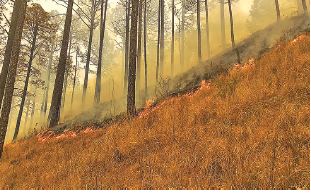
Short-term exposure to smoke from landscape fires significantly raises the risk of hospital admissions among children and adolescents for a wide range of diseases, according to a new international study published in *Nature Communications* on October 22, 2025.
The research, led by Shuang Zhou of Monash University, found that fine particulate matter from landscape fires (LFS PM2.5) was linked to higher hospitalisation rates for respiratory, infectious, cardiovascular, neurological, digestive, diabetic, and cancer-related illnesses among those aged 0–19 years. Between 2000 and 2019, the study analysed 67.9 million hospital admissions from children and adolescents across seven countries and territories — Australia, Brazil, Canada, Chile, New Zealand, Taiwan, and Thailand.
Landscape fires, including both wildfires and human-induced fires in forests, grasslands, and farmlands, generate large amounts of fine particulate pollution that can travel thousands of kilometres. This long-range transport makes LFS air pollution a major global public health concern, affecting populations far from the fire source.
Researchers examined daily hospital admission data from 1,012 communities and linked it with a high-resolution dataset on LFS PM2.5 exposure. They found that even short-term increases in fine particulate levels led to spikes in hospital admissions. Each 10 microgram per cubic metre (μg/m3) rise in LFS PM2.5 was associated with higher risks for all-cause (1.1%), respiratory (1.9%), infectious (1.5%), cardiovascular (2.9%), neurological (2.8%), diabetes (3.7%), cancer (1.5%), and digestive (0.8%) hospitalisations.
The study noted that health risks appeared even at low exposure levels for respiratory, infectious, and neurological conditions, while other disease categories showed increased risk beyond 15–20 μg/m3. Geographic differences were also evident, with Brazil, Chile, and Thailand showing the highest LFS PM2.5 concentrations. Chile recorded a median level of 9.5 μg/m3, followed by Brazil (2.2 μg/m3) and Thailand (1.6 μg/m3). Australia and Taiwan recorded 1.1 μg/m3 each, while Canada had the lowest exposure at 0.3 μg/m3.
Children aged 5–9 years faced higher risks of all-cause and infectious hospital admissions. The study found that children in regions with low or medium GDP per capita and upper-middle-income countries were more vulnerable, likely due to poorer healthcare infrastructure and limited access to protective measures.
The findings highlight children’s particular susceptibility to air pollution, attributed to immature respiratory and immune systems and higher outdoor activity levels. Globally, LFS PM2.5 has been linked to an estimated 12.9 million deaths among children and adolescents between 2000 and 2014.
The researchers urged targeted interventions, including improving indoor air quality through filtration systems, raising public awareness about air pollution risks, and implementing stronger policies to reduce exposure in lower-income regions.
Protests in Jakarta, Yogyakarta and Bandung brought students onto the streets over rising costs, forest fires and civil...

Organisations linked to Neville Roy Singham are under US congressional scrutiny over funding. Their coverage of protests in...

US President Donald Trump says Washington and New Delhi are close to a trade agreement that will differ...

Iran has ruled out transferring its enriched uranium stockpile outside the country, with security official Mohsen Rezaei reiterating...

Donald Trump has urged Volodymyr Zelensky to pursue a peace deal with Russia, warning that Ukraine could face...

Pakistan, battling insurgencies at home and tensions along multiple borders, is too overstretched to offer meaningful military support...

Aries: The day will be auspicious...