Last Updated: October 21, 2026
Last Updated: October 21, 2026





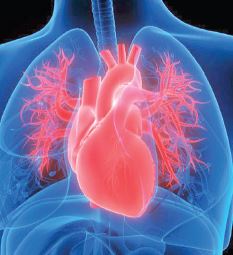
A new study suggests that stem cell therapy administered soon after a heart attack could significantly lower the risk of developing heart failure, offering new hope for patients with weakened heart function.
Heart failure often follows a heart attack when the heart muscle is severely damaged and can no longer pump blood efficiently. The condition can appear suddenly or progress over time, leading to symptoms such as fatigue, shortness of breath, swollen legs, and irregular heartbeat.
Published in the BMJ, the clinical trial indicates that injecting stem cells directly into the heart’s arteries soon after a heart attack may help protect heart function and prevent long-term complications. Researchers say the findings point to stem cell therapy as a potential addition to standard treatment for heart attack patients at risk of heart failure.
The international study, conducted by researchers from Queen Mary University of London and several institutions in Iran, evaluated the effects of delivering stem cells through intracoronary infusion — a technique where stem cells are injected directly into the coronary arteries. The goal was to see whether this approach could reduce heart failure and related complications over a three-year period.
The trial included 396 patients, aged between 57 and 59, who had recently suffered their first heart attack but had no prior heart disease. Among them, 136 patients received an infusion of allogenic Wharton’s jelly-derived mesenchymal stem cells within three to seven days of the heart attack, along with standard medical care. The remaining 260 patients received only standard care.
Results showed a clear difference between the two groups. Patients treated with stem cells had lower rates of heart failure — 2.77 cases per 100 person-years, compared with 6.48 in the control group. They were also less likely to be readmitted to hospital for heart failure, with rates of 0.92 versus 4.20 per 100 person-years. The combined rate of cardiovascular death and readmission for heart attack or heart failure was also significantly lower in the stem cell group — 2.8 compared with 7.16 per 100 person-years.
While the therapy did not have a statistically significant effect on deaths or readmissions for heart attack alone, the improvement in heart function was notable. By six months, patients who received stem cells showed greater recovery of heart performance than those who did not.
Researchers called the results encouraging but stressed the need for further large-scale studies to confirm the long-term benefits and safety of stem cell therapy after heart attacks. If validated, the procedure could become an important tool in preventing heart failure — one of the most serious complications following a heart attack.
Protests in Jakarta, Yogyakarta and Bandung brought students onto the streets over rising costs, forest fires and civil...

Organisations linked to Neville Roy Singham are under US congressional scrutiny over funding. Their coverage of protests in...

US President Donald Trump says Washington and New Delhi are close to a trade agreement that will differ...

Iran has ruled out transferring its enriched uranium stockpile outside the country, with security official Mohsen Rezaei reiterating...

Donald Trump has urged Volodymyr Zelensky to pursue a peace deal with Russia, warning that Ukraine could face...

Pakistan, battling insurgencies at home and tensions along multiple borders, is too overstretched to offer meaningful military support...

Aries: The day will be auspicious...