Last Updated: October 21, 2026
Last Updated: October 21, 2026





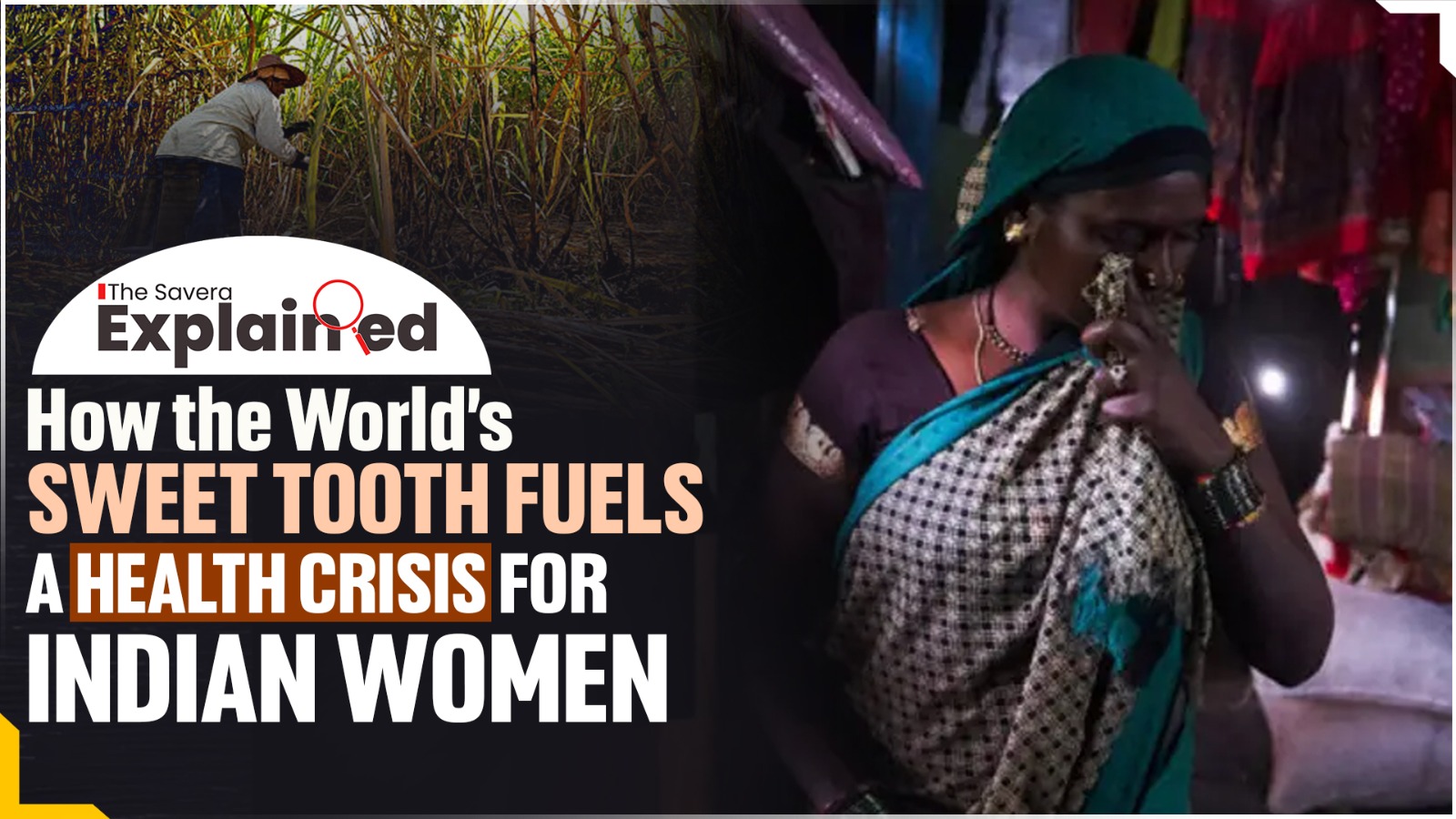
Maharashtra: India is the world’s second-largest sugarcane producer, churning out around 35 million metric tons of sugar annually 18% of global output with powerhouse states like Uttar Pradesh, Maharashtra, and Karnataka driving the industry.
In 2023 alone, the country exported $1.03 billion worth of raw sugar, making it the fourth-largest exporter globally and supplying markets from Bangladesh to Malaysia. This booming trade fuels beverage giants like Coca-Cola and PepsiCo and is projected to hit 0.9 million metric tons in exports by 2025.
But in Maharashtra’s Beed district — the heart of the sugarcane belt — the industry’s sweet success hides a bitter truth: thousands of women cane cutters face a silent health crisis, subjected to forced or coerced hysterectomies in a cycle of exploitation, questionable medical practices, and systemic neglect.
In 2009, 18-year-old Rani collapsed while cutting cane in Beed district after enduring 18-hour shifts deep into her ninth month of pregnancy. Taken to a private hospital, she delivered twin daughters — but, like many women in the region, she later learned that doctors had removed her uterus without her knowledge or consent. The babies did not survive, and the surgery left her unable to conceive again. Today, Rani works in the fields with chronic pain, abandoned by her husband and stigmatized by her in-laws as “unlucky.” But Rani is not alone who bears this pain, poverty, debts who forced many women to do the same many forcibly but some do it by their willingness to work for long hours.
A Widespread Pattern
Researchers estimate that between 2016 and 2019, 4,605 women in Beed underwent forced or coerced hysterectomies. The National Family Health Survey shows Maharashtra’s overall hysterectomy rate is 2.6% — below the national average of 3.2% — but among sugarcane workers in Beed, the rate soars to 17%. One local study found a staggering 36% in a sample of 200 women.
The problem is rooted in the harsh realities of seasonal cane work. Around 1.5 million laborers migrate each year to Maharashtra’s sugarcane fields, often from drought-hit areas. Contractors advance wages, trapping workers in debt, and penalize missed workdays — making menstruation or illness costly. Without rest breaks or sanitation, many women are persuaded or pressured into surgery as a “permanent solution” to menstrual problems.
Life in the Fields
Cane cutters, often from marginalised castes and tribal communities, endure backbreaking shifts for ₹300–₹400 a day ($3.88–$4.64), sometimes unloading trucks through the night. Workdays can stretch to 18 hours, double the Ministry of Labour’s recommended limit. Sanitation is scarce; toilets and clean water are often unavailable.
Veteran worker Shanta Ashraram Namdas, now 60, recalls using her headscarf to stem heavy bleeding before undergoing a hysterectomy — again without full understanding of the consequences. The surgery cost ₹30,000 ($360), borrowed from her contractor, and took two years of labour to repay.
Early Marriage, Early Labour
Child marriage compounds the issue. Over 23% of Indian women aged 20–24 were married before 18; in Maharashtra’s cane belt, many girls wed before 15 and start fieldwork immediately. Priya, married at nine, gave birth at 13 and had a hysterectomy at 22 after years of overwork and poor menstrual care. “I didn’t know what a uterus was,” she says. Pain and weakness followed, but debt forced her back to work within days.
Medical and Social Consequences
Health experts warn that hysterectomy should be a last resort. When performed on young women, it can trigger early menopause, hormonal imbalances, anxiety, depression, and heightened risk of heart disease — up to 250% higher for those operated on before age 35. Yet in Beed, private hospitals often recommend the procedure prematurely, citing exaggerated cancer risks. With around 120 private hospitals in the district, campaigners say some exploit vulnerable women for profit.
The stigma around menstruation deepens the problem. In many rural communities, periods are considered shameful, and clean sanitary products are rare. Women working long shifts sometimes wear the same cloth pad for days.
Climate Pressures and Debt Cycles
Climate change has worsened the situation. Unpredictable rainfall and long droughts have disrupted cane seasons, reducing earnings and extending debt. Women’s health deteriorates from poor nutrition, lack of medical care, and continuous heavy labour.
Resistance and Advocacy
In 2019, women workers formed the Mahila Ustod Kamgar Sanghatana (Women’s Sugarcane Workers Union) to demand rights, legal aid, and awareness on reproductive health. Led by activists like Manisha Tokle, the union campaigns for paid maternity leave, health insurance, and hostel facilities for migrant children. It also trains women in wage calculation, first aid, and navigating health schemes.
Advocates have pushed for mandatory reproductive health check-ups before and after migration seasons, tighter regulation of surgical procedures, and more health camps in rural areas. While Maharashtra’s government has acknowledged the issue, women say tangible improvements are slow.
Maharashtra produces a third of India’s sugar, supplying major corporations including Coca-Cola and PepsiCo. After a 2024 investigation in The New York Times, Coca-Cola said it was “deeply troubled” and would “look into” the issue. Yet campaigners argue that without corporate accountability and stricter labour protections, abuses will continue.
Ladakh is seeing two changes at once: a new district has been announced, and the Centre has proposed...

What if a decision taken in Washington could influence India’s oil bills, export earnings and trade relations with...

What happens when the world’s richest business leaders clash over one of the world’s biggest internet markets? A...

Pakistan is heading into its wheat-growing season with a serious water problem. The country is facing a projected...

Imagine a foreign national standing among Indian citizens at a political protest, raising questions about the government or...

For thousands of Indian tech workers in the United States, a job offer is only the beginning of...

Aries: The day will be auspicious...