Last Updated: October 21, 2026
Last Updated: October 21, 2026





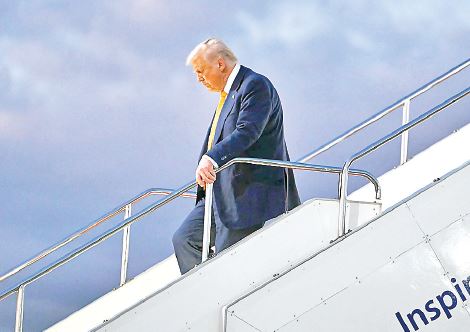
Japan’s new prime minister faces her first major international test this week as US President Donald Trump visits Tokyo, where he met Emperor Naruhito on October 27 and is due to hold a face to face with Sanae Takaichi on October 28. The encounter will be the first in person meeting between Trump and Takaichi since she became Japan’s first female prime minister earlier this month. The outcome will shape Tokyo’s immediate relationship with Washington and set the tone for Takaichi’s foreign policy in her opening days in office.
Takaichi assumes office at a moment of fragile domestic politics. Her government is a minority coalition that followed a turbulent period for the ruling Liberal Democratic Party. Observers say the new prime minister must secure international credibility quickly while managing a narrow parliamentary position at home. Her first substantive bilateral meeting with the US president therefore carries outsized political significance.
Trade and security are expected to dominate the talks. Trump’s visit comes amid his broader Asia tour, during which he will press partners to increase purchases of American goods and to make economic commitments that benefit US industry. For Tokyo the immediate tasks will be to reassure Washington on defence cooperation and to seek stability in trade ties that have been unsettled by recent tariff and investment demands. Japanese officials have signalled readiness to discuss investment and commercial cooperation as part of a broader bid to stabilise economic relations with the United States.
Takaichi and Trump spoke by phone before the meeting, and both framed the relationship as a priority. Tokyo’s public line is that strengthening the Japan US alliance is central to the new administration’s diplomatic and security agenda. Analysts note that a successful personal rapport with Trump would deliver domestic dividends for Takaichi, reinforcing her image as a leader who can secure Japan’s strategic position with its most important ally.
The personal dimension matters to both leaders. Trump has long placed value on direct chemistry with foreign counterparts. For Takaichi, who is a known protégé of former prime minister Shinzo Abe, cultivating a warm working relationship with Trump may provide both a diplomatic advantage and a political boost at home. Several of Takaichi’s senior appointments include officials who served under Abe, a signal that she intends continuity on key security and trade lines while consolidating her political base.
Regional implications are immediate. Takaichi is widely regarded as a China hawk and her elevation has drawn attention in Beijing. Observers in East Asia are watching whether Tokyo will deepen its security alignment with Washington and how that positioning will affect ties with China and with South Korea. During the transition period Beijing has been cautious in its responses to Takaichi’s appointment, underscoring the diplomatic sensitivity of the moment. The outcome of the Trump meeting will therefore be read closely in capitals across the region. Defense spending and burden sharing are likely to figure prominently. Takaichi has publicly endorsed higher defence outlays and a more robust security posture. Trump has pressed US allies for higher defence contributions and for financial arrangements covering US troops stationed abroad. The meeting presents an early test of Tokyo’s willingness to respond to those demands, and how far Tokyo will go to accommodate Washington while protecting domestic priorities and supplier interests.
Economics will run in parallel to security. Washington seeks concrete commercial commitments, including investment and procurement that support US industry. Tokyo has in recent months discussed large-scale business commitments to the United States and is compiling proposals in sectors such as semiconductors and energy. How those proposals are shaped and presented during Trump’s visit will influence whether immediate concessions or announcements are achievable, and how Japan navigates competing domestic and allied expectations.
For Takaichi the challenge is dual. She must deliver tangible results from a high profile diplomatic opening while preserving room to craft a distinct political identity. Relying too heavily on Abe-era networks and policies risks blurring her personal mandate. At the same time, aligning closely with the United States may be necessary to shore up national security and to manage regional pressure from an increasingly assertive China. The balance she strikes in Tokyo this week will reveal how she intends to govern and where she will position Japan in a period of strategic rivalry. Domestic optics will matter as much as substance. A successful summit with Trump could solidify Takaichi’s standing among voters and within party ranks, offering momentum for fragile coalition management. Conversely, perceived concessions or missteps could expose her to criticism from political opponents and complicate efforts to build a stable governing majority. For a new prime minister, the first overseas engagements are rarely neutral events. They shape narratives at home and signal priorities abroad.
In short, Tuesday’s meeting is more than a protocol event. It is a diplomatic crucible for a new prime minister confronting urgent security, trade and regional challenges. How Takaichi navigates personal diplomacy with President Trump, the demands of alliance politics, and the expectations of domestic constituencies will help define her first months in office and Japan’s trajectory in a fractious regional environment.
Protests in Jakarta, Yogyakarta and Bandung brought students onto the streets over rising costs, forest fires and civil...
Organisations linked to Neville Roy Singham are under US congressional scrutiny over funding. Their coverage of protests in...

US President Donald Trump says Washington and New Delhi are close to a trade agreement that will differ...
Iran has ruled out transferring its enriched uranium stockpile outside the country, with security official Mohsen Rezaei reiterating...
Donald Trump has urged Volodymyr Zelensky to pursue a peace deal with Russia, warning that Ukraine could face...
Pakistan, battling insurgencies at home and tensions along multiple borders, is too overstretched to offer meaningful military support...
Aries: The day will be auspicious...