Last Updated: October 16, 2026
Last Updated: October 16, 2026





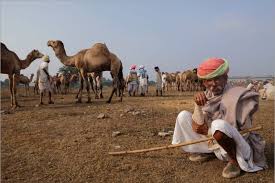
Believe it or not: The camel is synonymous with the image of Rajasthan, India’s main desert state. Here, herders from Bikaner in the state’s west lead their camels across fields in Dausa in the state’s east.
These photos capture the current reality of the species in what was once its stronghold.
The loss of pastures and village commons to agricultural fields is one of several major reasons for the ongoing decline of the camel in Rajasthan.
Other causes include mechanisation of agriculture, and the Rajasthan Camel (Prohibition of Slaughter and Regulation of Temporary Migration or Export) Act, 2015, which crashed market prices by curbing sales.
The camel population in Rajasthan has declined by over 70 per cent since the 1990s, plunging from 746,000 in 1992 to just over 200,000 in the 2019 census, as they have become economically unviable for breeders.
Rajasthan is home to roughly 70–80% of India’s camel population, serving as a critical hub for the dromedary camel. Primarily used for desert transportation, agriculture, and tourism, camels are integral to Thar Desert life. The state holds the annual Pushkar Camel Fair and has declared the camel its state animal, offering subsidies for breeding due to declining.Camel safaris in places like Jaisalmer are a major tourist activity, featuring overnight stays in desert camps and camel rides over sand dunes.
Population Decline & Protection: The population of camels in Rajasthan has decreased by 35% from 2012 to 2019, leading to the Rajasthan Camel Act of 2015, which prohibits the slaughter and illegal export of camels. numbers.
According to FSSAI, camel milk must have a minimum fat content of 3%. Yet the fat content of milk from the same camel can vary between 1.9% and 4%, depending on season and diet. And consumers increasingly prefer lower-fat milk.
Camel breeders want to supply a natural product that consumers can trust. Feeding supplements or using additives in milk to meet arbitrary standards for fat content would not be the best way forward. Representations were made to request that the new standard be amended and we asked all to help raise awareness of the issue.
Ushtra Vikas Yojana, the Camel Development Scheme, was announced by the state government on 2 October 2016. 31.5 crore rupees has been allocated for the scheme over four years.
The camel pastoralists of Rajasthan believe that Shiva created them to be the guardians of the camel. They are the custodians of a long and proud heritage which goes back at least 600 years.
Organisations including the FAO (Food and Agriculture Organisation of the United Nations) agree that the camel is a key resource for future food security in arid zones. Camel numbers are increasing in other countries in response to climate change and increasing economic viability.
But Rajasthan’s heritage camel culture is disappearing fast. To maintain camel herds takes knowledge, expertise and a lot of hard work. The camels of Rajasthan cannot survive without their guardians. Courtesy: DTE)
Amid the ongoing protests, investigators have found that certain elements backed by Pakistan launched a multi-layered digital warfare...

~Dr M L Jat India has moved from food scarcity to record harvests. The next leap is from...

Smartness is the key to getting ahead in life. Whether it is the mastery of job skills or...

Varanasi: A massive explosion triggered the collapse of a two-storey building in Uttar Pradesh’s Varanasi on Thursday, leaving...

Sofia: A vessel sailing under the flag of San Marino caught fire in the Black Sea near Romania...

New Delhi: Accusing the Congress of double-speak on women dignity, the Bharatiya Janata Party (BJP) Mahila Morcha on...

Aries: The day will be auspicious...