Last Updated: October 21, 2026
Last Updated: October 21, 2026





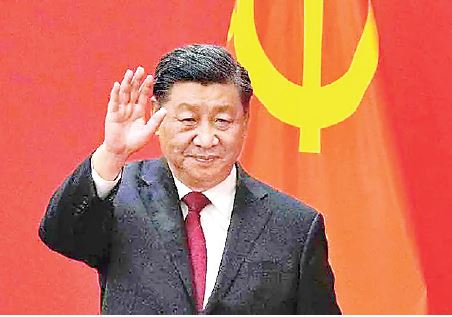
For Chinese President Xi Jinping, the ongoing fourth plenum of the Communist Party of China (CPC) is far more than a routine political gathering. It is not simply a conference to endorse economic policies or reaffirm party goals. Instead, it has become a platform for Xi to demonstrate his deepening control over China’s military, political institutions, and leadership ranks.
Just days before the plenum began, Xi executed one of the most dramatic purges in recent CPC history. On Friday, he removed China’s second highest-ranking military official, He Weidong, from all posts, along with eight other senior figures within the party and the armed forces. He, who had served as Vice Chair of the Central Military Commission (CMC), was a key figure in China’s defense hierarchy. The CMC, which Xi chairs, is the supreme decision-making body overseeing the People’s Liberation Army (PLA).
The purge has reshaped the top tier of China’s military command. With He’s dismissal, only four members now remain on the seven-member CMC appointed in 2022, marking the smallest leadership group in its history. This change symbolizes the most concentrated form of military authority in Xi’s hands since the founding of Communist China.
Including He Weidong, Xi has now dismissed three CMC members since 2022, further underscoring his intent to maintain unchallenged control over the armed forces.
The nine officials dismissed last week reflect a broader pattern: Xi’s deepening consolidation of political and institutional power. Beyond his military role, He Weidong also served as a member of the 24-member Politburo — one of the most influential bodies in the CPC. His removal marks the first time a Politburo member has been dismissed in such a manner during Xi’s tenure.
The eight other senior officials purged were members of the CPC’s Central Committee, a powerful body comprising the Politburo and its elite Standing Committee. Their dismissal represents one of the most extensive shake-ups in the upper ranks of the party and military in recent decades.
In a statement, Chinese Defence Ministry spokesperson Senior Colonel Zhang Xiaogang said investigations found that the nine individuals “seriously violated party discipline and allegedly committed grave duty-related crimes.” He added that “the amounts involved are particularly huge, the nature of the offences extremely severe, and the impact exceptionally negative.”
The purge extended to key figures overseeing sensitive commands, including those managing operations directed at Taiwan, China’s nuclear capabilities, and ideological control within the military.
The eight dismissed officials include:
l Miao Hua, a former CMC member responsible for political, ideological, and personnel affairs;
l He Hongjun, Miao’s deputy;
l Wang Xiubin, former deputy director of the CMC Joint Operations Command Centre;
l Lin Xiangyang, former commander of the Eastern Theatre Command, which oversees operations facing Taiwan;
l Qin Shutong, former army political commissar;
l Yuan Huazhi, former navy political commissar;
l Wang Houbin, former commander of the Rocket Force, China’s nuclear arm; and
l Wang Chunning, former commander of the Chinese police force.
These positions represent some of the most sensitive areas in China’s military and internal security structure. The simultaneous removal of such a wide range of senior officers has underscored Xi’s determination to centralize authority further and eliminate potential dissent.
Analysts say that the fourth plenum offers Xi an opportunity not only to reshape the party’s top ranks but also to cement his control ahead of a politically significant period. According to experts, Xi is expected to appoint between 15 and 30 new loyalists to top CPC bodies following the purge.
Observers believe the scale of the latest campaign may surpass previous internal cleanups. During the 2017 purge, 15 Central Committee members were replaced. Current projections suggest the 2025 campaign could exceed that number, making it the largest shake-up in the party’s modern history.
Jonathan Ping, a China expert at Bond University, told ABC News that the reshuffle will likely strengthen Xi’s dominance over both political and military elites. “While anti-corruption remains a stated goal, the timing and targets suggest political motives — especially the removal of rivals or those losing favour. The campaign has evolved from cleaning up graft to controlling dissent and reinforcing Xi’s dominance,” Ping said.
Beyond internal politics, the moves are closely watched internationally for their implications on China’s future geopolitical direction. The U.S. intelligence community has previously assessed that Xi has ordered the Chinese military to prepare for a potential invasion and occupation of Taiwan by 2027. Analysts believe that Xi’s tightening control over the CMC and senior defense leadership could be part of this broader strategic preparation.
The latest dismissals continue a pattern established early in Xi’s rule. Since taking power in 2012, Xi has led several rounds of anti-corruption and disciplinary campaigns targeting officials across party, military, and state sectors. While these drives have removed many corrupt figures, they have also eliminated political rivals and consolidated Xi’s personal authority.
The 2025 purge appears to follow the same trajectory. By sidelining experienced figures and replacing them with loyalists, Xi ensures a command structure that is both obedient and aligned with his ideological agenda.
The changes also reinforce Xi’s long-standing narrative of maintaining “absolute party leadership over the military,” a principle that he has emphasized repeatedly in speeches. The inclusion of political commissars among those dismissed — officials responsible for ensuring party loyalty within the armed forces — highlights the depth of Xi’s drive to bring every arm of the state under his command.
As the fourth plenum continues, global analysts are watching for signals not only about China’s economic direction but also about further personnel reshuffles. Any new appointments to the Central Committee, Politburo, or CMC will offer insights into the next phase of Xi’s governance and his priorities in the coming years.
With this purge, Xi Jinping has demonstrated that no level of the Chinese leadership is beyond his reach. What began as an anti-corruption initiative has evolved into a tool for absolute political control. The latest removals — sweeping through the military, political, and ideological ranks — mark another chapter in Xi’s campaign to centralize power, silence dissent, and shape the CPC in his image.
Protests in Jakarta, Yogyakarta and Bandung brought students onto the streets over rising costs, forest fires and civil...
Organisations linked to Neville Roy Singham are under US congressional scrutiny over funding. Their coverage of protests in...
US President Donald Trump says Washington and New Delhi are close to a trade agreement that will differ...
Iran has ruled out transferring its enriched uranium stockpile outside the country, with security official Mohsen Rezaei reiterating...
Donald Trump has urged Volodymyr Zelensky to pursue a peace deal with Russia, warning that Ukraine could face...
Pakistan, battling insurgencies at home and tensions along multiple borders, is too overstretched to offer meaningful military support...
Aries: The day will be auspicious...