Last Updated: October 21, 2026
Last Updated: October 21, 2026





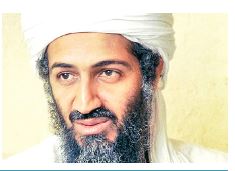
In the chaotic weeks after the September 11 attacks in 2001, the United States launched its most determined pursuit in modern history: the hunt for Osama bin Laden. The al-Qaeda chief, responsible for the deaths of nearly 3,000 people, had become America’s most wanted man. President George W Bush ordered a massive counterterrorism campaign to dismantle al-Qaeda’s network in Afghanistan. Yet, despite the world’s most advanced military and intelligence apparatus, bin Laden managed to escape.
More than two decades later, a former CIA officer, John Kiriakou, has revealed a striking new detail. According to him, bin Laden evaded capture from the Tora Bora mountains in Afghanistan by disguising himself as a woman. In an interview with ANI, Kiriakou, who once led the CIA’s counter-terrorism operations in Pakistan, said the failure stemmed partly from a critical deception within US ranks — a translator, secretly an al-Qaeda operative, who misled the American forces at a crucial moment.
Operation Jawbreaker and the Tora Bora Chase
In the aftermath of 9/11, Washington launched Operation Jawbreaker, a CIA-led mission to gather intelligence on al-Qaeda and prepare the ground for US military intervention in Afghanistan. The goal was clear: find Osama bin Laden and either capture or eliminate him.
Gary Berntsen, the CIA field commander who led the operation on the ground, later described how his team pieced together bin Laden’s movements. When intelligence intercepts traced one of his radios, they identified his likely location in the rugged White Mountain range of Tora Bora by late November 2001.
Berntsen’s operatives, working alongside Afghan tribal militias, began sweeping the mountain caves. US aircraft bombarded suspected hideouts as the intelligence community closed in on what was believed to be bin Laden’s final stronghold.
However, Berntsen had repeatedly requested 800 Army Rangers to block possible escape routes into Pakistan. The request was denied. In his memoir Jawbreaker: The Attack on Bin Laden and Al Qaeda, Berntsen admitted that this decision was one of the major reasons bin Laden slipped away.
The Escape that Changed the Course of the War
Kiriakou’s latest revelation adds a dramatic twist to what happened next. As US and Afghan forces surrounded Tora Bora, they believed bin Laden’s surrender was imminent.
“We did not know that the translator for the commander of Central Command was actually an al-Qaeda operative who had infiltrated the US military,” Kiriakou said. This translator, he claimed, played a key role in deceiving the Americans.
According to Kiriakou, bin Laden, through this translator, requested a delay in surrender, saying he needed time to evacuate women and children from the mountains. “Can you just give us until dawn? We want to evacuate the women and children and then we’ll come down and give up,” he reportedly said.
General Tommy Franks, then heading the US Central Command, agreed to the request. The decision, however, proved disastrous. During the night, bin Laden and several close aides reportedly escaped disguised as women, hidden under burqas, and crossed into Pakistan in a pickup truck.
“They had all escaped,” Kiriakou said. “And so we had to move the fight to Pakistan proper.”
The revelation underscores how the fog of war, combined with internal infiltration and overreliance on intermediaries, cost the US the chance to capture the al-Qaeda leader early in the war.
Buying Cooperation in Pakistan
Bin Laden’s escape shifted the focus to Pakistan, where he would ultimately be found a decade later. Kiriakou, reflecting on those years, said that Washington had to “essentially buy” cooperation from then-President Pervez Musharraf.
“Our relations with the Pakistani government were very, very good,” he said. “Let’s be honest here, the United States loves working with dictators. Because then you don’t have to worry about public opinion and you don’t have to worry about the media anymore.”
He described how the US poured “millions and millions and millions of dollars” in military and development aid into Pakistan. In return, Musharraf allowed the Americans extensive operational freedom, including intelligence gathering and drone operations based out of Balochistan.
Yet, Musharraf’s cooperation had limits. Kiriakou noted that Pakistan’s military was less concerned about al-Qaeda than about India. “They cared about India,” he said. “And so in order to keep the military happy and keep some of the extremists happy, he had to allow them to continue this dual life — pretending to cooperate with the Americans on counterterrorism while committing terror against India.”
The Wider Context: Terror Networks and Regional Blind Spots
Kiriakou recalled a pivotal discovery in March 2002, when US forces raided a Lashkar-e-Taiba safe house in Lahore and recovered an al-Qaeda training manual. “It was the first time we were able to connect Lashkar-e-Taiba with al-Qaeda,” he said. “It was also the first analytical link tying the Pakistani government to al-Qaeda.”
However, despite the seriousness of the finding, it was not made public. “The decision was made at the White House,” Kiriakou said. “The relationship with Pakistan was considered bigger than India or regional concerns, at least temporarily. We needed the Pakistanis more than they needed us.”
The geopolitical calculation was clear: Pakistan’s assistance was vital for operations in Afghanistan, even if it meant turning a blind eye to its other allegiances.
From Tora Bora to Abbottabad
It would take nearly ten years before bin Laden was tracked down again. On May 2, 2011, US Navy SEALs raided his compound in Abbottabad, Pakistan, and killed him. For many in the intelligence community, it was a long-delayed justice — but the scars of Tora Bora remained.
Had US forces blocked the escape routes or seen through the deception in December 2001, the war in Afghanistan might have ended differently. Instead, bin Laden’s flight prolonged a two-decade conflict that reshaped the global order.
Kiriakou’s account, while controversial, paints a picture of the confusion, misplaced trust, and intelligence failures that defined the early “war on terror.” The image of the world’s most wanted man fleeing under a veil serves as a stark reminder that even the most powerful nations can falter when deception enters the battlefield.
Protests in Jakarta, Yogyakarta and Bandung brought students onto the streets over rising costs, forest fires and civil...
Organisations linked to Neville Roy Singham are under US congressional scrutiny over funding. Their coverage of protests in...
US President Donald Trump says Washington and New Delhi are close to a trade agreement that will differ...
Iran has ruled out transferring its enriched uranium stockpile outside the country, with security official Mohsen Rezaei reiterating...

Donald Trump has urged Volodymyr Zelensky to pursue a peace deal with Russia, warning that Ukraine could face...
Pakistan, battling insurgencies at home and tensions along multiple borders, is too overstretched to offer meaningful military support...
Aries: The day will be auspicious...