Last Updated: October 26, 2026
Last Updated: October 26, 2026





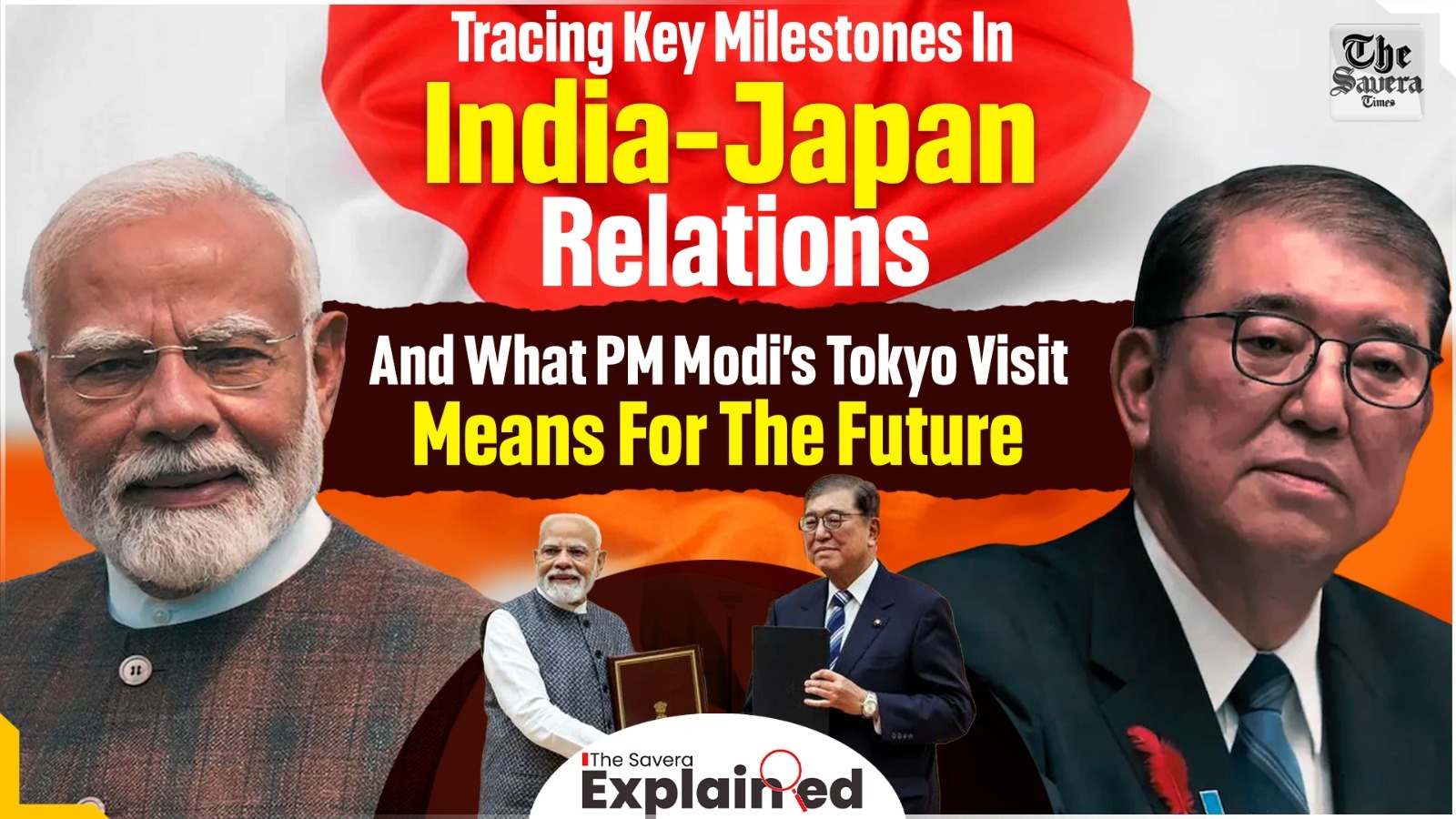
New Delhi: PM Modi’s arrival in Tokyo on Friday reflects more than just a diplomatic visit. It highlights the relationship that has over the years evolved and become stronger over the decades, one now poised to take on new dimensions amid shifting global equations, economic realignments, and security concerns in the Indo-Pacific region.
From Cultural to Strategic Partners
India and Japan share deep cultural roots that go back over 1,400 years, starting with Buddhism traveling from India to shape Japanese art, architecture, and philosophy.
In modern times, ties began after World War II when India signed a peace treaty with Japan in 1952 and waived reparations, becoming one of the first countries to do so. Japan responded with aid for India’s development projects, like the Delhi Metro.
Over time, this evolved from cultural and economic links to a strong strategic partnership. Today, both nations work together to counter China’s growing influence in the Indo-Pacific, focusing on security, technology, and shared democratic values.
Key Milestones in Bilateral Relations
Global Partnership 2000
In 2000, during Prime Minister Yoshiro Mori’s visit to India, the two countries declared a “Global Partnership.” This marked a shift toward closer strategic ties under PM Atal Bihari Vajpayee.
Strategic Partnership 2006
The relationship was upgraded to a “Strategic and Global Partnership” in 2006 under PM Manmohan Singh and Japan’s Shinzo Abe. It emphasized security, defense, and economic cooperation.
Special Strategic and Global Partnership 2014
In 2014, PM Narendra Modi and Abe elevated it to a “Special Strategic and Global Partnership.” This paved the way for big projects like high-speed rail and deeper defense ties. They also strengthened the Quad grouping with the US and Australia for a free Indo-Pacific.
Economic Relations: The Bullet Train and Beyond
Japan is a key investor in India, funding infrastructure like industrial corridors and smart cities. The flagship Mumbai-Ahmedabad bullet train project uses Japan’s Shinkansen technology and symbolizes their economic bond. Bilateral trade tops $20 billion yearly, with potential in clean energy and semiconductors.
Beyond trains, Japan supports India’s growth in renewable energy, electric vehicles, and green hydrogen. Modi’s visit may announce more investments in these areas to boost economic ties.
Defense Cooperation in Focus
Defense ties have grown with joint military exercises like Dharma Guardian (army), JIMEX (navy), and Shinyuu Maitri (air force), improving coordination. Japan relaxed export rules for defense tech, enabling work on unmanned systems and cybersecurity.
Facing Chinese naval moves in the East China Sea and Indian Ocean, both nations share intelligence and patrol together to ensure maritime security.
Technology, Startups, and Digital Collaboration
Japan’s strengths in robotics, AI, and manufacturing complement India’s booming startups and IT talent. They’re partnering on semiconductors, 5G, quantum computing, and space tech to reduce reliance on China.
This collaboration helps diversify supply chains and fosters innovation in digital economies.
People-to-People Ties and Cultural Diplomacy
Cultural exchanges thrive with yoga, Indian food, and films gaining popularity in Japan, while Japanese language classes grow in India. Around 920,000 Indian professionals work in Japan’s IT sector, thanks to easier visas.
Student exchanges, tourism, and cultural events strengthen everyday bonds between the two peoples.
What to Expect from PM Modi’s Visit
As Modi lands in Tokyo, several key announcements are anticipated:
Economic Deals: New Japanese investments in infrastructure, green energy, and semiconductor manufacturing in India.
Defence Collaboration: Steps towards joint production of defence equipment and technology transfers.
Digital and Technology Partnerships: Agreements on AI, 5G, cybersecurity, and start-up ecosystems.
Cultural and Educational Exchanges: Initiatives to promote tourism, language training, and student mobility.
Regional Security Cooperation: Stronger alignment on Indo-Pacific strategy and Quad initiatives.
A Partnership For The Future
India-Japan ties have come a long way -from cultural goodwill to economic cooperation and now, a full-fledged strategic partnership.
As both countries face similar challenges-from securing supply chains to ensuring regional stability-their collaboration will only grow deeper.
PM Modi’s Tokyo visit could set the tone for the next decade, shaping a partnership that blends India’s scale and talent with Japan’s technology and capital.
In a world marked by geopolitical rivalries and economic uncertainties, the India-Japan equation might well emerge as a cornerstone of stability and growth in the Indo-Pacific.
Imagine opening WhatsApp on your phone, but the SIM card linked to your account is not inside the...

Delhi’s air pollution is once again raising health concerns, with the Air Quality Index (AQI) entering the ‘poor’...

Ladakh is seeing two changes at once: a new district has been announced, and the Centre has proposed...

What if a decision taken in Washington could influence India’s oil bills, export earnings and trade relations with...

What happens when the world’s richest business leaders clash over one of the world’s biggest internet markets? A...

Pakistan is heading into its wheat-growing season with a serious water problem. The country is facing a projected...

Aries: The day will be auspicious...