Last Updated: September 29, 2026
Last Updated: September 29, 2026





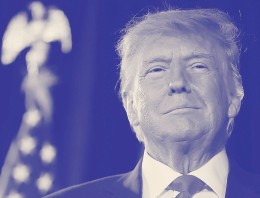
Donald Trump’s newly released National Security Strategy (NSS) isn’t just another political document. It’s a blueprint for how the United States now sees its role in the world, with a hard pivot toward “America First” nationalism and a strikingly transactional approach to global power.
Critics have even suggested that some aspects risk echoing the exploitative logic of historical empires — the sort of self-interested economic dominance once practiced by the East India Company — albeit in a modern geopolitical framework. At its core, the 2025 NSS rejects the post-World War II idea that the U.S. should act as the global security provider and promoter of democratic values everywhere. Instead, it argues that America’s interests — and only America’s interests — should guide foreign policy. The document states bluntly that the U.S. should no longer feel obligated to “prop up the entire world order like Atlas” and that other countries matter only insofar as they affect U.S. security and prosperity. This ideological shift is at the heart of the controversy.
Advocates of the strategy argue that previous U.S. approaches — led by liberal internationalism — stretched American resources too thin, pulled the U.S. into endless conflicts, and cost too much in blood and treasure without clear returns. But critics counter that the NSS does more than just trim excess. They say it repackages U.S. global engagement in a way that prioritizes commercial advantage and geopolitical leverage over traditional diplomacy and collective security, in some ways resembling how the East India Company once combined trade with power projection. In that historical analogy, commercial goals drove political decisions, often at the expense of local autonomy — a comparison meant to illustrate concerns about economic coercion and influence rather than literal colonialism.
One key theme of the strategy is economic nationalism dressed up as security imperatives. The document puts a strong emphasis on trade, technology, and industrial strength as elements of national defense. It argues that a strong economy is not separate from national security but its very foundation. That means trade negotiations, tariffs, and economic policy are all folded into “security” objectives rather than being viewed as separate diplomatic tools. In this view, pushing for favorable trade deals or using tariffs to protect U.S. industries becomes just as critical as maintaining military deterrence.
This shift is already having real consequences. In 2025, the U.S. imposed steep tariffs on Indian exports — initially 25 percent and then another punitive 25 percent — tied to India’s energy and defense relationships, particularly its purchase of Russian oil. India slammed these measures as unjustified, and the dispute escalated into a broader diplomatic and trade crisis. That tension illustrates how security language is being used to justify economic pressure, not just military alliances.
The NSS also reframes traditional alliance structures. Instead of positioning the U.S. as the guarantor of a liberal world order, it expects allies and partners to shoulder more of the burden for their own defense and economic stability. Europe, in particular, is criticized for weakness and cultural decline, with the strategy lamenting demographic changes and immigration as national security issues. This language has drawn accusations that the U.S. is exporting its own domestic political battles onto the global stage. In the Asia-Pacific, the strategy continues to identify China as a competitor, but it frames that competition not just as military rivalry but as a battle over innovation, supply chains, and economic dominance. To counter China’s rise, the strategy calls on partners like Japan, South Korea, and India to contribute to regional security, especially through groupings like the Quad (U.S., Japan, Australia, and India). The strategy explicitly calls for deepening commercial, technological, and defense ties with India as part of this broader Indo-Pacific approach.
But the document’s treatment of India reveals some of its contradictions. On the one hand, India is portrayed as a key partner in balancing China and contributing to regional security. On the other hand, Washington’s aggressive tariff policy and economic coercion undermine that partnership and fuel distrust in New Delhi. The result is a relationship that is simultaneously strategic and transactional, driven less by mutual values and more by immediate American interests.
The NSS also marks a departure from a deeply interventionist U.S. foreign policy tradition. It echoes what analysts describe as a shift toward selective engagement and respect for national sovereignty, at least in theory. The strategy explicitly rejects pushing other nations toward democratic or social changes that conflict with their traditions. That’s a sharp break from past U.S. rhetoric about promoting universal democratic values.
But critics warn that this selective engagement and economic opportunism could hollow out long-term alliances. Instead of building durable cooperative frameworks, the U.S. might find itself in short-term transactional deals that prioritize immediate advantage over lasting diplomatic ties. That, they say, risks turning powerful partnerships into arrangements that look like leverage and extraction more than genuine cooperation, hence the loaded comparison to the East India Company.
New Delhi: The Ministry of External Affairs (MEA) on Tuesday stated that there are currently 163 Indian seafarers...

At least 49 people were killed and 58 others injured in an alleged military airstrike near a crowded...

At least 27 people have been killed and seven injured across Nepal in natural disasters, including floods, landslides,...

US President Donald Trump is willing to give Iran sanctions relief and release frozen funds as part of...
United States President Donald Trump on Monday (local time) announced that Indian multinational conglomerate Essar Group, through its...
United States President Donald Trump said that American officials held discussions with mediators on Iran on Monday, Al...
Aries: The day will be auspicious...