Last Updated: October 17, 2026
Last Updated: October 17, 2026





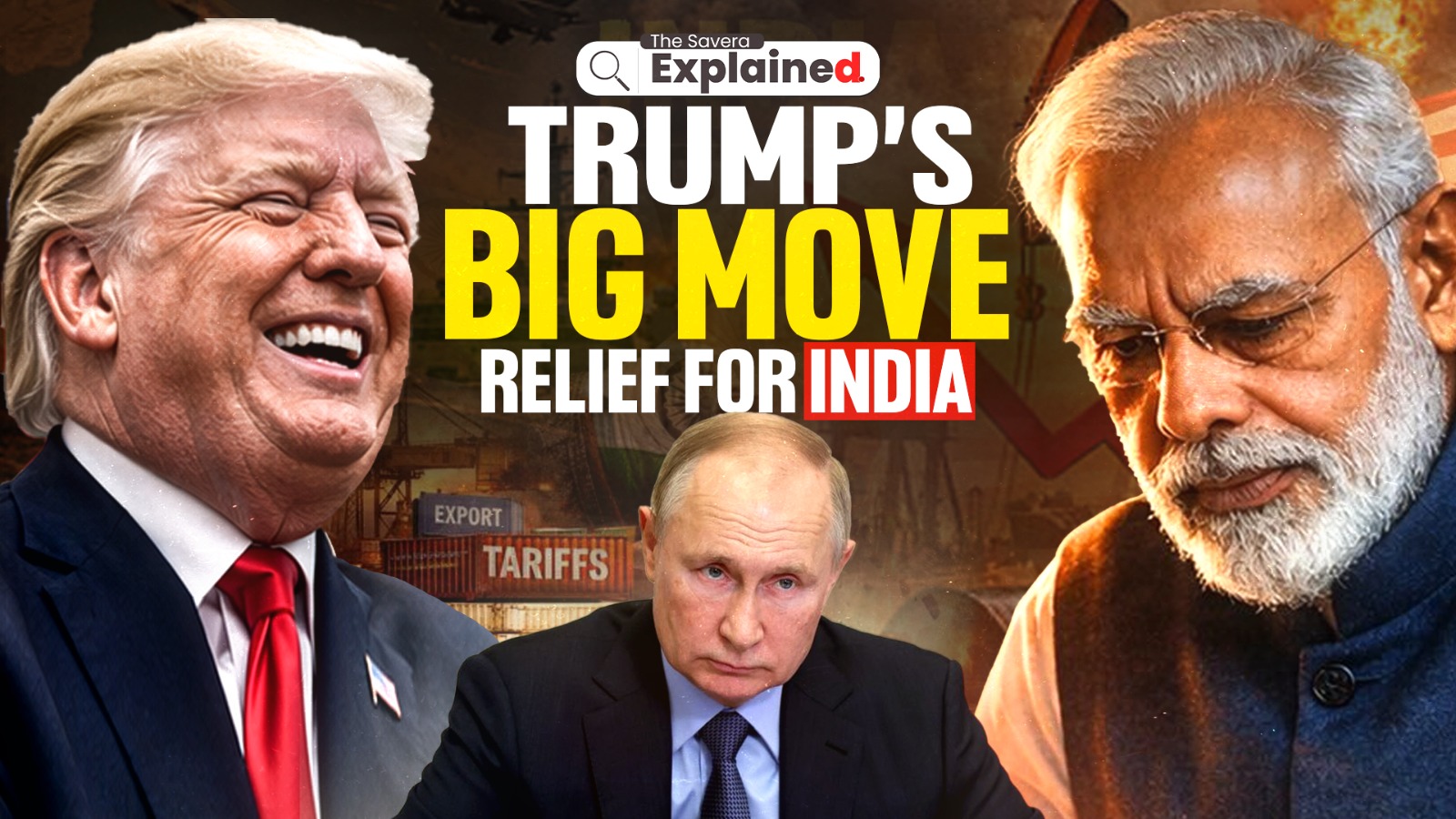
What if a decision taken in Washington could influence India’s oil bills, export earnings and trade relations with one of its biggest markets? That is exactly why US President Donald Trump’s latest move on Russia matters to India.
Trump has temporarily waived the implementation of new Russia-related sanctions and tariffs that could have exposed Indian exports to duties of up to 100 per cent. The decision offers immediate relief, but does it mean India-US trade tensions are finally easing? Let’s understand.
What Has Trump Announced?
On October 16, Trump issued an executive order pausing the implementation of certain sanctions, restrictions and tariffs under the newly enacted Lindsey O. Graham Sanctioning Russia and Iran Act of 2026.
The law aimed to increase pressure on Moscow over its war against Ukraine. It also authorised tariffs of up to 100 per cent on goods from major buyers of Russian oil and gas.
The waiver came just before the October 18 deadline. However, this is a pause, not a permanent cancellation of the measures. Washington could still reconsider its approach. (Reuters, October 17)
Why Was India Facing a 100 Per Cent Tariff Threat?
The United States has been pressing countries to reduce their economic engagement with Russia to limit Moscow’s financial resources.
India, one of the major buyers of Russian crude oil, faced the risk of additional tariffs on its exports to America.
The stakes are high because the US is India’s largest export market. Indian goods exports to the US reached $42.79 billion between April and August 2026, compared with $40.39 billion during the same period last year, according to Reuters.
Had the additional tariffs been imposed, Indian products could have become significantly more expensive for American buyers, affecting exporters and their competitiveness. (Reuters, October 15)
Why Does India Continue to Buy Russian Oil?
India’s position is closely linked to energy security. As a country with a large population and substantial energy requirements, it depends heavily on imported crude oil.
Following Russia’s invasion of Ukraine in 2022, India increased purchases of discounted Russian oil. These supplies offered refiners another source of crude and helped them manage costs.
New Delhi has maintained that its energy decisions must reflect national interests, market conditions and the need to secure affordable supplies.
Suddenly reducing Russian oil purchases could require refiners to find alternatives, potentially increasing costs depending on global prices and supply availability.
How Does the Pause Benefit India?
The immediate benefit is reduced uncertainty. Indian exporters have avoided the immediate threat of the proposed 100 per cent tariffs linked to the new law.
The decision also gives India more room to manage its energy requirements without facing this particular tariff deadline.
However, businesses should not assume that all trade risks have disappeared. The waiver does not permanently remove the legal provisions, and future US policy decisions could again affect Indian exports.
Nor does the announcement guarantee cheaper petrol or diesel in India. Retail fuel prices depend on several factors, including global crude prices, exchange rates and domestic pricing decisions.
India-US Trade Deal: Is a Breakthrough Possible?
There is another important development. On October 15, India’s Trade Secretary Rajesh Agrawal said the first phase of the India-US trade deal had been finalised and was undergoing legal drafting.
Under the existing framework, US tariffs on Indian goods had been reduced from 50 per cent to 18 per cent, Reuters reported.
India is seeking preferential market access and greater tariff stability compared with competing exporters such as Vietnam, Bangladesh and Indonesia.
The sanctions pause could improve the atmosphere for negotiations, but it does not settle every disagreement. The final outcome will depend on the terms both countries accept.
What Happens Next?
The bigger question is whether Washington will maintain the pause and whether both countries can conclude their trade agreement.
For India, the challenge is to protect energy security, support exporters and maintain strong relations with the US while continuing to manage its relationship with Russia.
The takeaway is simple: Trump’s decision gives India breathing room, but not a permanent solution. The real test will be whether temporary relief leads to lasting trade stability and a stronger India-US economic partnership.
Mumbai: Bollywood actor Imran Khan has filed a writ petition in the Bombay High Court seeking a stay...

Apia: Minister of State (MoS) for External Affairs, Pabitra Margherita, on Saturday interacted with members of the Indian...
At least five workers were killed and six injured after a 15-kilolitre reactor exploded during a hydrogenation process...

New Delhi: Union Minister of State Jitendra Singh has said that India’s space economy — currently valued at...

New Delhi: The Supreme Court-constituted High Powered Enquiry Committee (HPEC) has started inviting complaints and representations from people...
New Delhi: Global crude oil prices are likely to ease to nearly $80 a barrel in 2027 as...
Aries: The day will be auspicious...