Last Updated: October 21, 2026
Last Updated: October 21, 2026





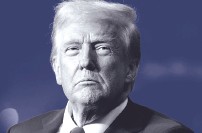
US President Donald Trump has reversed his earlier hardline stance on Chinese students, now openly supporting their entry into American universities. The shift comes amid ongoing US–China trade negotiations and mounting domestic pressure from universities concerned about declining international enrolments.
Speaking on Fox News’ The Laura Ingraham Show, Trump said he did not want to “cut half of the students from all over the world” and “destroy the entire university and college system.” He described international education as a key economic contributor, saying, “We take in trillions of dollars from students. The students pay more than double when they come from most foreign countries. I view it as a business.”
Reinforcing his position, Trump told reporters at the White House that the United States should welcome at least another 600,000 Chinese students. “I hear so many stories that we’re not going to allow their students. We’re going to allow them to come in. It’s very important,” he said. He added that he had conveyed this to Chinese President Xi Jinping, saying, “We’re honoured to have their students here. We check and we’re careful, but we want them here.”
This represents a major reversal from earlier this year when the administration threatened to revoke visas of Chinese nationals studying in sensitive fields. In May, Secretary of State Marco Rubio had announced plans to “aggressively revoke visas” for students linked to the Chinese Communist Party or involved in critical sectors like technology and engineering. The administration even proposed a “Compact for Academic Excellence” that would cap international students at 15 per cent of undergraduate enrolment and limit any single country to 5 per cent.
Other senior officials had echoed the crackdown rhetoric. Attorney General Pam Bondi had declared that studying in the US was a “privilege, not a right,” while a Congressional committee chaired by John Moolenaar demanded details of Chinese nationals enrolled in advanced programs. Lawmakers argued that China was using higher education as a tool for espionage, aiming to gain access to cutting-edge research. “Beijing is trying to dominate critical technologies by any means necessary—through economic espionage, forced tech transfers, and exploiting Western universities,” Michigan Republican Bill Huizenga claimed earlier this year.
Despite these concerns, Trump’s recent comments mark a pragmatic shift toward economic and diplomatic interests. Chinese students are among the largest contributors to the US education economy. According to the Institute of International Education (IIE), 277,398 Chinese students were enrolled in American universities in the 2023–2024 academic year, making up nearly 25 per cent of all international students. Indian students ranked first with 331,602 enrolments. At their peak in 2019, Chinese student numbers reached 370,000 but have since declined, largely due to the pandemic and geopolitical tensions.
Experts estimate that Chinese students contributed more than $11 billion (around Rs. 9.75 lakh crore) to the US economy last year through tuition fees, living expenses, and related spending. Analysts believe that Trump’s new approach reflects both economic necessity and political calculation. Many universities, especially smaller and mid-tier institutions, depend heavily on international students’ higher tuition fees to balance their budgets. “When you take them out, the lesser colleges are affected,” Trump admitted, suggesting that the policy reversal was partly to protect domestic institutions from financial strain.
The timing of Trump’s remarks is also significant. Trade talks with China are at a sensitive stage, and the administration faces a potential Supreme Court ruling over tariff disputes. Several lower courts have already ruled in favour of universities challenging the administration’s earlier restrictions on funding and visa policies. By softening his stance, Trump may be seeking to avoid additional legal and political backlash while maintaining leverage in trade negotiations.
Some observers also point to Trump’s business-oriented worldview. His emphasis on education as an economic driver rather than a security threat indicates a preference for transactional diplomacy. The President’s statement that “I want to be able to get along with the world” reflects a broader attempt to balance confrontation with engagement in US–China relations.
Ultimately, Trump’s U-turn underscores the competing pressures within his administration—between national security hawks advocating for tighter controls and economic advisers urging stability in international education and trade. As the US–China relationship continues to evolve, the fate of Chinese students in America will likely remain a barometer of the broader diplomatic climate.
Protests in Jakarta, Yogyakarta and Bandung brought students onto the streets over rising costs, forest fires and civil...
Organisations linked to Neville Roy Singham are under US congressional scrutiny over funding. Their coverage of protests in...

US President Donald Trump says Washington and New Delhi are close to a trade agreement that will differ...
Iran has ruled out transferring its enriched uranium stockpile outside the country, with security official Mohsen Rezaei reiterating...

Donald Trump has urged Volodymyr Zelensky to pursue a peace deal with Russia, warning that Ukraine could face...
Pakistan, battling insurgencies at home and tensions along multiple borders, is too overstretched to offer meaningful military support...
Aries: The day will be auspicious...