Last Updated: October 18, 2026
Last Updated: October 18, 2026





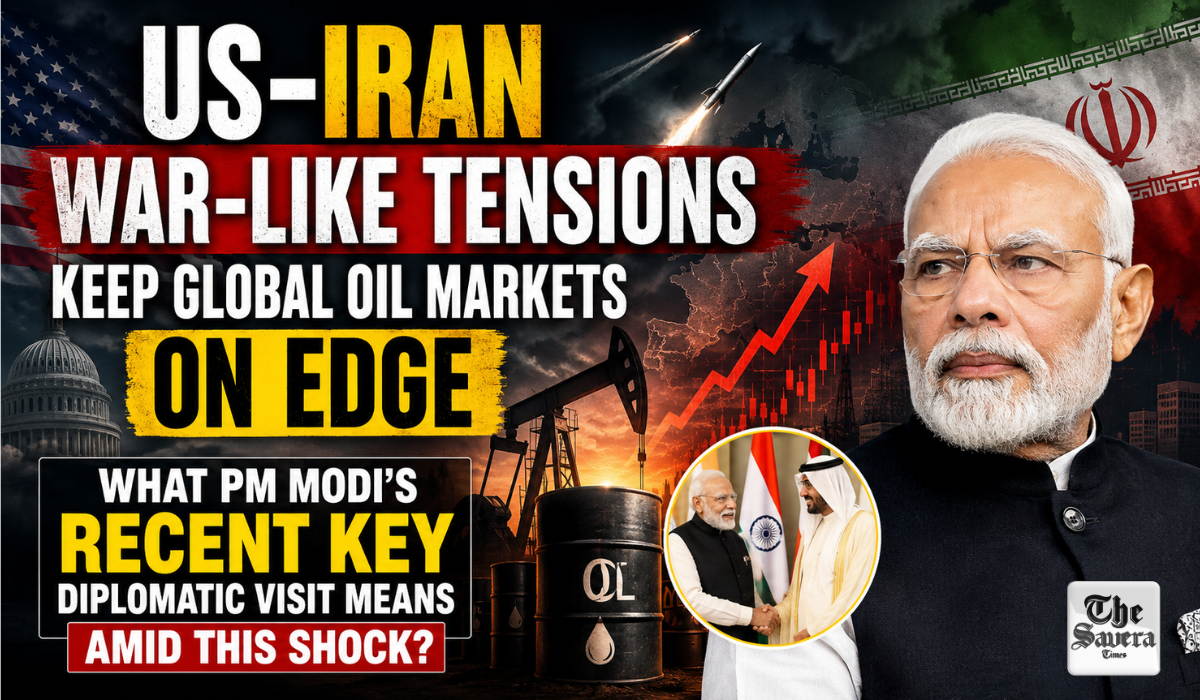
Tensions in the Strait of Hormuz are still far from over. Even after a fragile ceasefire between the United States and Iran, the situation at sea remains unstable. Disruptions in one of the world’s most important oil routes have pushed global crude prices close to $100–110 per barrel. The result is now visible at home — India has seen its first petrol and diesel price hike in nearly four years.
As Prime Minister Narendra Modi continues his five-nation diplomatic tour, India is trying to shield its economy from this growing energy shock.
Why US and Iran Are in Conflict
The tension between the US and Iran is long and deep. It began after the 1979 Iranian Revolution, which changed Iran’s political system and its relationship with the West.
Over the years, major issues have included:
The situation escalated sharply in February 2026 when US and Israeli forces carried out strikes on Iranian targets. Iran responded with missile and drone attacks and increased pressure on global shipping routes.
A ceasefire was announced in April 2026, but peace has remained fragile, especially at sea.
Strait of Hormuz: Why It Matters
The Strait of Hormuz is one of the most important energy routes in the world. Nearly 20–21% of global oil and LNG passes through it every day.
Because of this, even small disruptions create global impact.
In recent months:
So even though full-scale war has paused, the shipping route remains unstable. This uncertainty is enough to disturb global energy markets.
Global Oil Market Impact
Oil prices are highly sensitive to risk.
Since the conflict began:
This has created a global “risk premium” on oil — meaning prices stay high even without actual supply shortages.
The fear is simple: if the Strait worsens further, global oil supply could drop suddenly.
Impact on India: Fuel Prices Rise
India is one of the most affected countries because it imports more than 85% of its crude oil.
On 15 May 2026, oil companies increased petrol and diesel prices by about ₹3 per litre, the first hike in four years.
Approximate prices:
Why this matters:
Oil companies had been absorbing losses earlier, but high global prices made it unsustainable.
India’s Response: Diplomacy and Energy Security
To handle the crisis, Prime Minister Narendra Modi is on a five-nation visit covering:
Main goals of the tour:
This is India’s strategy to reduce dependence on any single risky region and build long-term energy security.
India–US Relations: Stable but Strategic
Despite global tensions, India–US relations remain strong.
Cooperation continues in:
India had already reduced direct oil imports from Iran due to earlier sanctions. So exposure is lower than in the past.
However, the current crisis highlights an important lesson:
Even strong partnerships cannot fully protect a country from global oil shocks. That is why India is focusing on diversification — more suppliers, more renewable energy, and stronger global ties.
The Strait of Hormuz crisis shows how connected the world is today. A problem in West Asia is not staying local — it is reaching Indian fuel pumps, transport costs, and household budgets.
In simple words:
A narrow sea route is shaping global oil prices, and those prices are shaping your daily expenses.
India’s challenge now is clear — manage today’s energy shock while building a stronger, more secure energy future for tomorrow.
What if a decision taken in Washington could influence India’s oil bills, export earnings and trade relations with...
What happens when the world’s richest business leaders clash over one of the world’s biggest internet markets? A...

Pakistan is heading into its wheat-growing season with a serious water problem. The country is facing a projected...
Imagine a foreign national standing among Indian citizens at a political protest, raising questions about the government or...

For thousands of Indian tech workers in the United States, a job offer is only the beginning of...

Three years ago, on October 7, 2023, Israel woke up to one of the deadliest attacks in its...