Last Updated: October 20, 2026
Last Updated: October 20, 2026





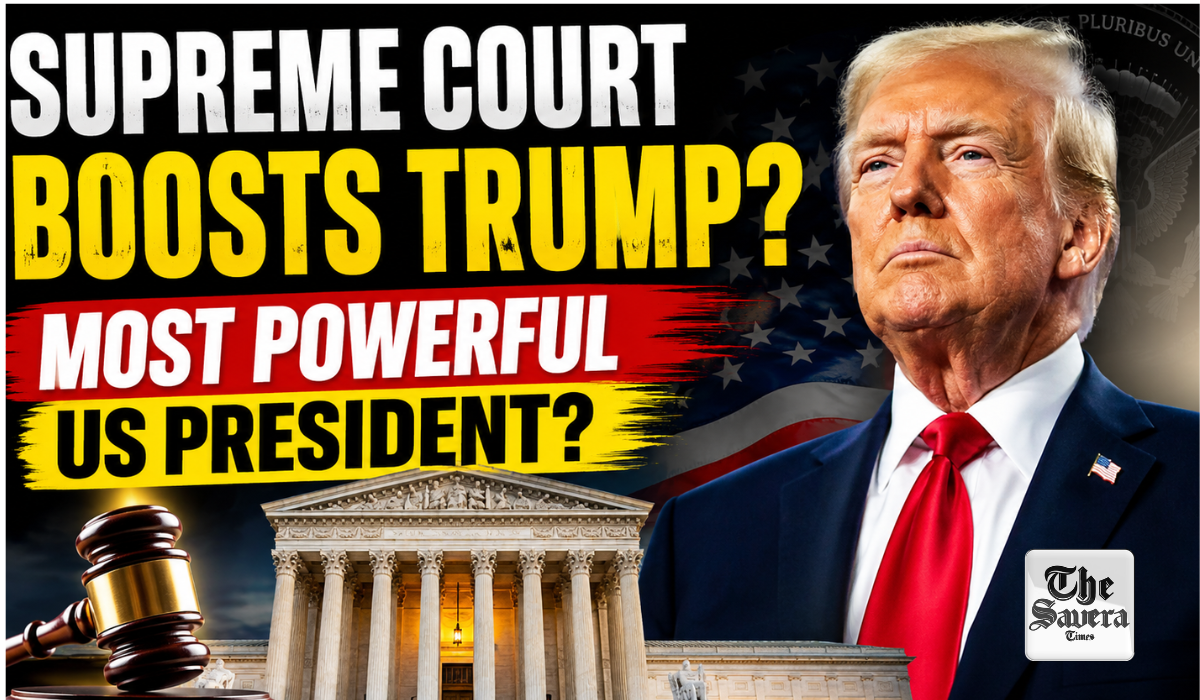
The US Supreme Court delivered a series of major rulings on June 30 that could reshape the balance of power in America for years to come. Some decisions strengthened President Donald Trump’s authority dramatically, while others limited his reach.
The big question now is: Has the Supreme Court made Trump the most powerful US president in generations?
To understand the answer, it is important to look at what happened, why it matters, and how it could change the American political system.
A Historic Shift in Presidential Power
At the center of the debate is a Supreme Court ruling that overturned a legal precedent that had been in place for 91 years.
The case involved Rebecca Kelly Slaughter, a member of the Federal Trade Commission, or FTC. In March 2025, President Trump removed her from office without providing any specific reason.
For decades, presidents could not easily remove officials from independent agencies like the FTC. A 1935 Supreme Court decision, known as Humphrey’s Executor, protected these officials from being fired without cause.
That protection was designed to keep certain government agencies independent from political pressure.
However, the Supreme Court has now reversed that position.
In a 6-3 ruling, the court said that the president must have greater control over officials who exercise executive power. Chief Justice John Roberts wrote that presidents should not be forced to work with officials they cannot trust or direct.
Why This Decision Is So Important
The ruling gives the president much greater authority over independent agencies.
These agencies often regulate businesses, oversee labour disputes, protect consumers, and enforce important federal laws.
Because of the judgment, current and future presidents may find it easier to remove officials from bodies such as the National Labor Relations Board, the Merit Systems Protection Board, and other regulatory agencies.
Supporters say this increases accountability because voters elect the president and expect the administration to carry out its agenda.
Critics argue that it weakens important checks and balances that prevent too much power from being concentrated in one office.
Justice Sonia Sotomayor, in a strongly worded dissent, warned that the decision could give presidents more power than ever before and weaken the independence of government institutions.
But Trump Did Not Win Every Case
Despite the major victory, the Supreme Court also handed Trump several setbacks.
One of them involved Federal Reserve Governor Lisa Cook.
Trump had attempted to remove Cook from the Federal Reserve Board over allegations that she committed mortgage fraud. Cook has denied those allegations.
In a narrow 5-4 ruling, the Supreme Court blocked Trump’s attempt to remove her immediately.
The court said the Federal Reserve is different from most government agencies because of its special role in managing the economy and controlling inflation.
As a result, Cook will remain in her position while lower courts continue examining the case.
This ruling was seen as a significant protection of the Federal Reserve’s independence from political influence.
Another Blow: Mail-In Ballots
The Supreme Court also rejected Trump’s challenge to state laws that count mail-in ballots arriving after Election Day, as long as they were mailed before the deadline.
Trump has repeatedly criticised mail-in voting and argued that late-arriving ballots should not be counted.
However, the court ruled that federal election laws do not require states to reject such ballots.
The decision means states can continue using these voting rules.
The E. Jean Carroll Case Remains
Trump also suffered a personal legal setback.
The Supreme Court declined to hear his appeal in the E. Jean Carroll case.
A New York jury had previously found Trump liable for sexually abusing Carroll and later defaming her. The verdict resulted in a $5 million judgment against him.
By refusing to review the case, the Supreme Court allowed that judgment to stand.
What Does It Mean for America?
The rulings show a mixed picture.
On one hand, the Supreme Court has significantly expanded presidential authority over independent government agencies, giving Trump and future presidents more control over the executive branch.
On the other hand, the court also drew clear limits by protecting the Federal Reserve’s independence, upholding mail-in ballot rules, and refusing to intervene in Trump’s personal legal battle.
The result is not unlimited presidential power, but it is a major shift. Many legal experts believe the ruling on independent agencies could become one of the most important decisions on executive authority in modern American history.
Whether it strengthens democracy through accountability or weakens it by concentrating power is a debate that is likely to continue long after the Trump presidency.
Ladakh is seeing two changes at once: a new district has been announced, and the Centre has proposed...

What if a decision taken in Washington could influence India’s oil bills, export earnings and trade relations with...
What happens when the world’s richest business leaders clash over one of the world’s biggest internet markets? A...

Pakistan is heading into its wheat-growing season with a serious water problem. The country is facing a projected...

Imagine a foreign national standing among Indian citizens at a political protest, raising questions about the government or...

For thousands of Indian tech workers in the United States, a job offer is only the beginning of...
Aries: The day will be auspicious...