Last Updated: October 15, 2026
Last Updated: October 15, 2026





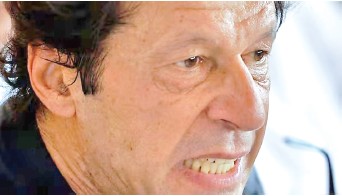
A close aide of former Pakistan prime minister Imran Khan was violently attacked in the United Kingdom days after delivering a strongly worded speech critical of Pakistan Army chief General Asim Munir, raising serious concerns about the safety of political dissidents abroad and the reach of Pakistan’s internal power struggles beyond its borders.
Shahzad Akbar, a former accountability adviser to Imran Khan and a senior figure in the Pakistan Tehreek-e-Insaf party, was assaulted near his residence in Cambridge. The attack left him with severe injuries, including a broken nose and fractured jaw, requiring immediate medical attention. According to Akbar, the assault occurred after a masked individual knocked on his door. When he opened it, he was punched repeatedly in the face. Disturbingly, the attacker allegedly returned after a brief interval and continued the assault while recording it, before fleeing the scene.
The incident took place shortly after Akbar delivered a speech at an event in Cambridge that later circulated widely on social media. In the speech, he openly criticised General Asim Munir, accusing him of undermining democracy and ruling Pakistan through fear, coercion and repression. Akbar alleged that under Munir’s leadership, Pakistan had witnessed widespread political victimisation, enforced disappearances and the silencing of dissent, particularly against members and supporters of the PTI.
Supporters of Imran Khan and PTI leaders have strongly condemned the attack, calling it politically motivated and part of a broader pattern of intimidation against critics of Pakistan’s military establishment. They argue that the timing of the assault, coming soon after Akbar’s speech gained attention, cannot be seen as a coincidence. The party has demanded a thorough investigation by British authorities and urged the UK government to ensure the safety of political refugees and exiles residing in the country.
Akbar has long been a controversial figure in Pakistan’s politics. As accountability adviser during Imran Khan’s tenure, he played a key role in pursuing corruption cases against opposition leaders. After Khan’s ouster and the subsequent crackdown on PTI, Akbar left Pakistan and continued to speak out from abroad against the military’s involvement in politics. He has previously claimed to have received threats and has accused Pakistan’s security apparatus of targeting him even outside the country.
The attack has reignited debate over what many describe as transnational repression, where governments or powerful institutions are accused of intimidating, harassing or attacking critics living overseas.
Human rights groups have repeatedly warned that political dissidents from countries with authoritarian tendencies often remain vulnerable even after leaving their homeland. The assault on Akbar has added weight to these concerns and sparked calls for greater international scrutiny.
Within Pakistan, the incident has further deepened political polarisation. PTI supporters see it as proof of the military’s intolerance of criticism, while critics of the party caution against drawing conclusions before the investigation is complete. Pakistan’s military establishment has not officially commented on the attack or on Akbar’s allegations.
British police have launched an investigation and are reportedly examining CCTV footage from the area. Akbar has formally lodged a complaint and has stated that he will cooperate fully with authorities. He has also said that despite the attack, he will not be silenced and will continue to speak out on what he describes as the erosion of democratic norms in Pakistan.
The assault has sent a chilling message to political activists and critics living abroad, particularly those from Pakistan who remain vocal against the military’s influence. It highlights how deeply entrenched and bitter Pakistan’s political conflict has become, extending far beyond its borders.
As Pakistan continues to grapple with instability, economic strain and civil-military tensions, incidents like this underline the high personal cost paid by those who challenge powerful institutions. Whether the attack leads to accountability or fades into another unresolved episode will be closely watched, not just by Pakistanis, but by the international community concerned about freedom of expression and political safety.
A roof collapse at Al-Khair School in Peshawar, Pakistan, killed at least 28 children and a female teacher...
Kabul: The series of road accidents in Afghanistan continues unabated. A truck and a passenger bus collided head-on...
Texas Attorney General Ken Paxton has filed a lawsuit against baby food manufacturer Gerber and its parent company,...

US President Donald Trump has urged voters to treat the November 3 midterm elections as though he were...

19-year-old man has been arrested for allegedly plotting a mass shooting at a Hindu temple in Illinois, US....

US President Donald Trump has called for people leaking sensitive military information to be shot, claiming reports about...

Aries: The day will be auspicious...