Last Updated: October 16, 2026
Last Updated: October 16, 2026





-Abhishek Vij
Am While much awareness is raised regarding crop diversification, Indian agriculture remains trapped in the same age-old crop cycle—wheat during the Rabi season and paddy during the Kharif season—even after centuries. When paddy is sown using traditional methods, it requires vast amounts of water for irrigation.
If the rainfall is abundant, the crop yields a golden harvest; otherwise, groundwater must be extracted using electricity-powered pumps for irrigation. A grim forecast has already been issued for Indian agriculture this year: the monsoon will be weak, as the El Niño phenomenon is not expected to exert its usual influence. The Meteorological Department has predicted belownormal rainfall. So far, the monsoon has failed to make a significant impact even in South India. While Eastern India is experiencing continuous rainfall—raising concerns about managing the resulting water flow—farmers in Punjab and Haryana are anxiously scanning the skies, waiting for rain. Currently, a delay in rainfall has been announced.
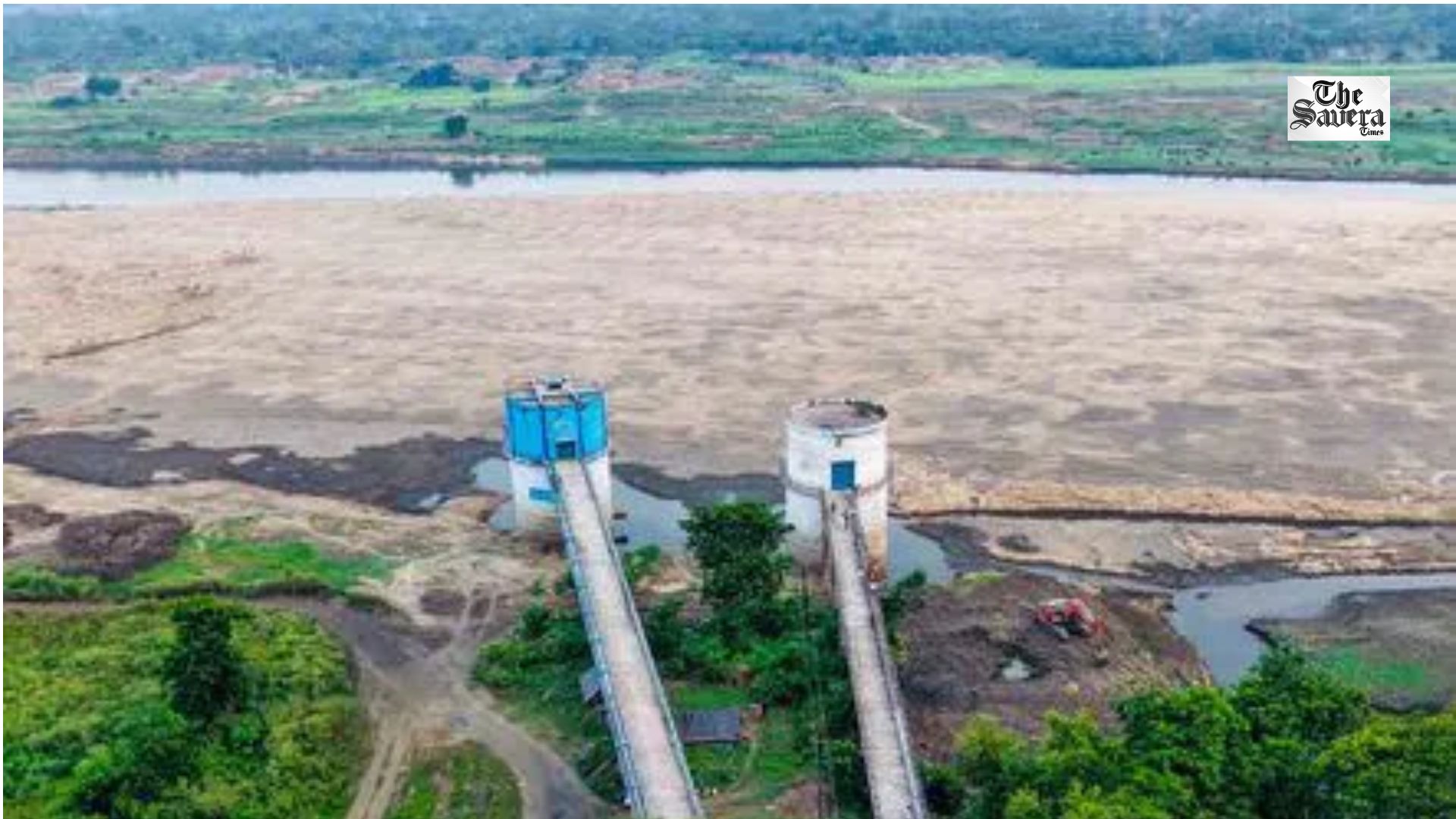
Due to this unfavorable weather, farmers in the region foresee the ruin of their Kharif crops. Paddy is sown across a vast region during the Kharif season, stretching from Punjab and Haryana to Maharashtra and Telangana; however, the monsoon is advancing very slowly towards North India. The weak monsoon has not only sparked concerns regarding agriculture but has also caused water levels in reservoirs across most states to plummet. The number of water bodies is already dwindling due to encroachment, and now the weather has dealt a further blow.
It appears as though the weather is poised to deal a severe setback to the Kharif season. Reports indicate that even in Punjab, where paddy sowing has already commenced, the water-efficient “dry farming” method is not being adopted, leading to an outcry over water scarcity. Alarming reports reveal that sowing activity has dropped by as much as 85 percent in Maharashtra and Telangana. Farmers in major agricultural states are deeply concerned. Sowing activity in these states is currently lagging behind last year’s levels, a trend that will have long-term repercussions.
Maharashtra has received 63% less rainfall than normal between June 1 and June 24, and reservoir water levels have dropped to 23% of capacity. This has not only reduced the area under cultivation but also dampened the demand for tractors and other agricultural equipment. This situation is likely to further fuel the economic slowdown spreading across the country. Another concern is the increased exploitation of groundwater due to the rainfall deficit. Reliance on tube wells is driving up farming costs.
If cultivation costs rise while production falls, controlling inflation will become a challenge. Globally, there is concern that although traffic through the Strait of Hormuz has resumed following the US-Iran ceasefire, it will take six months for the situation to normalize; meanwhile, the weak monsoon and resulting reliance on tube wells will push electricity demand to record highs. On Thursday, Punjab recorded a peak power demand of 16,335 MW.
Varanasi: A massive explosion triggered the collapse of a two-storey building in Uttar Pradesh’s Varanasi on Thursday, leaving...

Sofia: A vessel sailing under the flag of San Marino caught fire in the Black Sea near Romania...

New Delhi: Accusing the Congress of double-speak on women dignity, the Bharatiya Janata Party (BJP) Mahila Morcha on...

New Delhi: NITI Aayog’s Frontier Tech Hub released a Data Centre Evaluation Framework to help states plan for...
New Delhi: The Supreme Court on Thursday referred the cheque dishonour cases against actor and comedian Rajpal Yadav...

Mirzapur: Uttar Pradesh Chief Minister Yogi Adityanath on Thursday accused the Samajwadi Party (SP) and the Congress of...
Aries: The day will be auspicious...