Last Updated: October 21, 2026
Last Updated: October 21, 2026





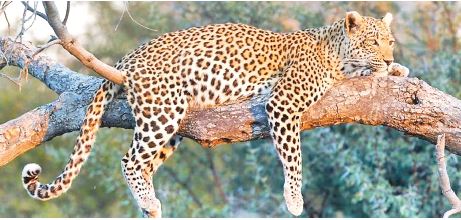
The leopard, one of West Africa’s key carnivores, has seen a dramatic population decline over the past three generations, equivalent to roughly 22.3 years. According to the latest assessment by the International Union for Conservation of Nature (IUCN), numbers have dropped by more than 50 per cent, largely due to human activities. The current population is estimated between 187 and 610 individuals, with the best estimate around 354.
Leopards in West Africa are distributed across Benin, Burkina Faso, Côte d’Ivoire, Ghana, Guinea, Guinea-Bissau, Niger, Nigeria, and Senegal. While leopards east of Nigeria may be genetically linked to populations in Cameroon, the IUCN used political boundaries for this assessment to aid in formulating a Regional Conservation Strategy and National Action Plans. The largest sub-population, numbering approximately 110 individuals, is found across Senegal and northern Guinea.
Historically, leopards occupied extensive ranges across West Africa, but human encroachment and other pressures have fragmented these populations. Since the 1750s, the species has lost between 86 and 95 per cent of its historical range in the region, significantly higher than the global average loss of 63–75 per cent.
The decline of leopards in West Africa is primarily driven by the rapid growth of human populations and the resulting changes in land use. Since 1950, the region’s population has quintupled, and it is projected to double by 2050. Expansion of croplands, particularly in Senegal, Ghana, Benin, and Nigeria, has reduced natural habitats such as savannas and forests, shrinking suitable leopard territory by more than half over the last 22 years.
The species’ prey, including bushbuck and duiker, has also suffered from habitat loss and unsustainable hunting. Studies indicate that trade in bushmeat caused an estimated 85 per cent decline in leopard prey populations across eleven protected areas between 1970 and 2002. Without sufficient prey, leopards struggle to survive and reproduce.
Poaching further exacerbates the decline. Leopard skins are widely used for traditional attire, medicine, and spiritual practices, while trafficking and illegal exploitation remain common. The IUCN warns that these human-driven pressures are unlikely to ease, given the region’s projected population growth, and the decline is expected to continue unless significant conservation measures are implemented.
Protests in Jakarta, Yogyakarta and Bandung brought students onto the streets over rising costs, forest fires and civil...

Organisations linked to Neville Roy Singham are under US congressional scrutiny over funding. Their coverage of protests in...

US President Donald Trump says Washington and New Delhi are close to a trade agreement that will differ...

Iran has ruled out transferring its enriched uranium stockpile outside the country, with security official Mohsen Rezaei reiterating...

Donald Trump has urged Volodymyr Zelensky to pursue a peace deal with Russia, warning that Ukraine could face...

Pakistan, battling insurgencies at home and tensions along multiple borders, is too overstretched to offer meaningful military support...

Aries: The day will be auspicious...