Last Updated: October 26, 2026
Last Updated: October 26, 2026





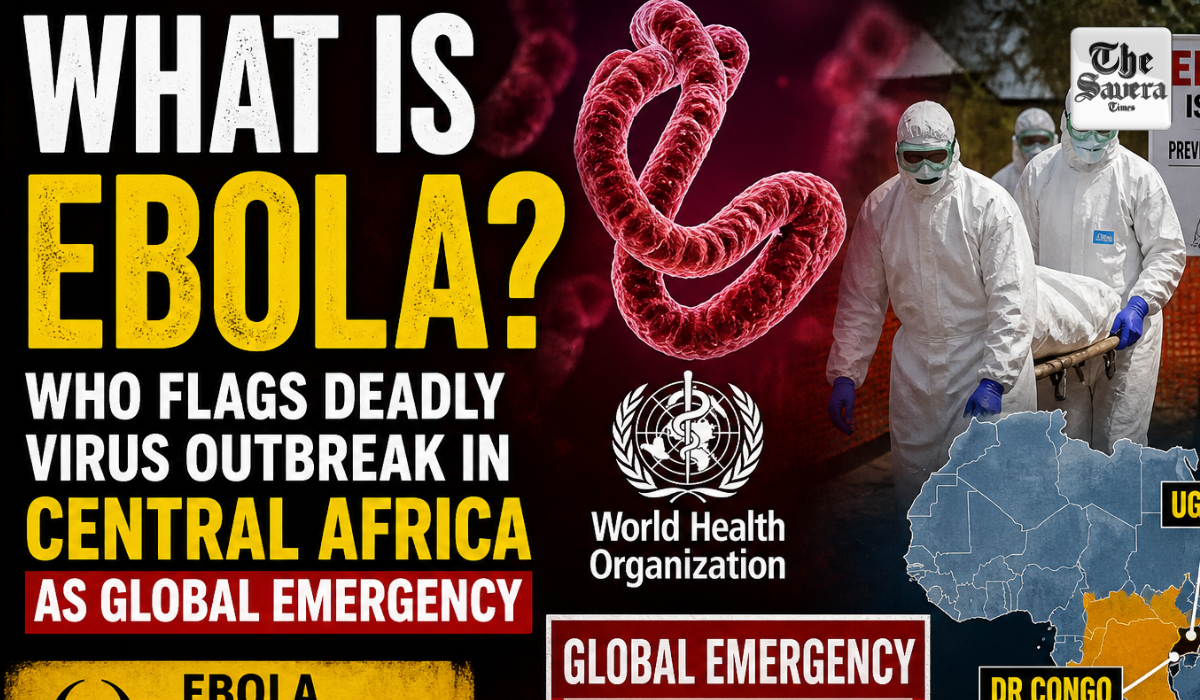
The World Health Organization (WHO) has declared the Ebola outbreak in the Democratic Republic of the Congo (DRC) and Uganda a “Public Health Emergency of International Concern.” This is the highest level of global alert issued by WHO for disease outbreaks.
The decision follows a rise in suspected and confirmed cases in border regions of the two countries, along with reported deaths linked to the virus. WHO has said the situation requires urgent international coordination, although it has not been classified as a pandemic.
Rising Cases in Congo–Uganda Border Region
Early reports suggest that hundreds of suspected cases have been recorded, mainly in eastern Congo, with infections also reported across the border in Uganda.
Health authorities believe the outbreak is linked to the Bundibugyo strain of the Ebola virus, a less common but still highly dangerous variant. Because the affected areas lie close to national borders, officials are concerned about the risk of cross-border transmission.
What is Ebola
Ebola is a severe and often deadly viral disease that affects humans and other primates. It spreads through direct contact with infected bodily fluids such as blood, vomit, saliva, or other secretions, as well as contaminated objects. Unlike airborne diseases such as influenza or COVID-19, Ebola does not spread through the air. However, it spreads rapidly in close-contact environments, especially where healthcare systems are weak or delayed in response.
Symptoms and Severity
The illness usually begins suddenly with symptoms such as fever, fatigue, muscle pain, and headache. As it progresses, patients may suffer vomiting, diarrhoea, internal bleeding, and multiple organ failure.
In severe cases, Ebola can have a very high fatality rate, ranging from 25% to 90%, depending on the strain and the speed of medical intervention. Early detection and isolation remain the most effective ways to control its spread.
History of Ebola Outbreaks
Ebola was first identified in 1976 during simultaneous outbreaks in Sudan and what is now the Democratic Republic of the Congo. The virus is named after the Ebola River, located near one of the earliest recorded outbreak sites.
Since then, most Ebola outbreaks have occurred in Central and West Africa, with the DRC experiencing repeated outbreaks over the decades. Uganda has also faced several outbreaks due to its proximity to affected regions and frequent cross-border movement.
The Major Outbreak of 2014–2016
The largest Ebola outbreak in history took place between 2014 and 2016 in West Africa, primarily affecting Guinea, Liberia, and Sierra Leone. That outbreak resulted in more than 11,000 deaths and caused widespread global concern, leading to major changes in how the world prepares for epidemic threats.
Why Congo and Uganda Are at Risk
The current outbreak is concentrated in regions with limited healthcare infrastructure. Remote villages, difficult terrain, and under-resourced hospitals make it harder to detect and treat cases quickly.
Additionally, cross-border movement between Congo, Uganda, and South Sudan increases the risk of wider spread. Mining activities and densely populated settlements further add to transmission risks.
How the Outbreak Is Being Controlled
Health authorities in both countries have initiated emergency response measures, including isolating patients, tracing contacts, and increasing surveillance at border points.
The WHO and Africa CDC are working with national governments to improve laboratory testing, provide protective equipment, and strengthen public awareness. Vaccination efforts are also being considered using existing Ebola vaccines that have shown effectiveness against multiple strains.
Global Risk Assessment and Next Steps
WHO has clarified that while the outbreak is serious, it does not yet meet the criteria of a global pandemic. The main concern at this stage is regional spread within Africa, particularly in vulnerable border areas.
The coming weeks will be crucial, as health agencies focus on containing transmission, improving response capacity, and preventing further escalation of cases.
Imagine opening WhatsApp on your phone, but the SIM card linked to your account is not inside the...

Delhi’s air pollution is once again raising health concerns, with the Air Quality Index (AQI) entering the ‘poor’...
Ladakh is seeing two changes at once: a new district has been announced, and the Centre has proposed...

What if a decision taken in Washington could influence India’s oil bills, export earnings and trade relations with...

What happens when the world’s richest business leaders clash over one of the world’s biggest internet markets? A...

Pakistan is heading into its wheat-growing season with a serious water problem. The country is facing a projected...
Aries: The day will be auspicious...