Last Updated: October 21, 2026
Last Updated: October 21, 2026





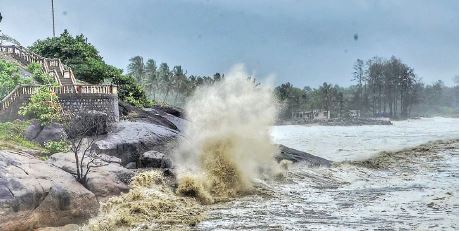
The World Meteorological Organization (WMO) has issued a global alert, calling for accelerated action to protect people from escalating weather, water, and climate-related hazards. At its Extraordinary Congress in Geneva from October 20 to 22, representatives from 193 Member States endorsed a “Call to Action” aimed at achieving universal early warning coverage by 2027. The initiative is a cornerstone of the UN’s Early Warnings for All (EW4All) programme.
“Every dollar invested in early warnings saves up to fifteen dollars in avoided losses,” WMO Secretary-General Celeste Saulo said, underlining the cost-effectiveness of timely alerts. “No one should die for lack of warning.” Launched in 2022 by UN Secretary-General António Guterres, EW4All is co-led by WMO, the UN Office for Disaster Risk Reduction (UNDRR), the International Telecommunication Union (ITU), and the International Federation of Red Cross and Red Crescent Societies (IFRC). Its goal is to ensure that every individual, regardless of location, is protected by life-saving alerts for hazards such as cyclones, floods, heatwaves, or droughts.
The Call to Action stresses strengthening all links in the early warning “value chain”: monitoring and forecasting hazards, assessing risks, disseminating alerts, and ensuring communities can act on them. Officials highlighted that technology alone is insufficient. Alerts must be timely, trusted, and easily understandable at the community level. A representative from Fiji said, “We must move from delivering forecasts to delivering understanding,” emphasizing people-centered, culturally inclusive communication.
Despite progress, gaps remain significant. By 2024, 108 countries reported some capacity for multi-hazard early warning systems, up from 52 a decade ago, but nearly half the world’s nations remain exposed. In countries lacking adequate systems, disaster mortality is six times higher and four times as many people are affected compared to nations with functional systems. The largest gaps exist in Least Developed Countries, Small Island Developing States, and conflict-affected regions. Assessments of 62 countries show that half have only basic hazard monitoring capacity, while 16 percent have less than basic capacity.
The WMO urged immediate political and financial commitments. Priorities include integrating early warning systems into national climate and disaster policies, securing sustained financing, empowering national meteorological and hydrological services, ensuring inclusivity, and leveraging technological innovation, including artificial intelligence, to enhance predictive accuracy. Donor nations and development banks were called on to provide predictable funding for early warning infrastructure and capacity-building.
Over the past five decades, weather, water, and climate-related disasters have claimed over 2 million lives, 90 percent in developing nations. Saulo stressed, “Early warnings are not a luxury — they are a human right. The cost of inaction will always be higher.” For vulnerable nations such as India, facing monsoons, cyclones, and heatwaves, the renewed UN push could accelerate integration of early warning systems into development plans and improve preparedness at community and regional levels.
Protests in Jakarta, Yogyakarta and Bandung brought students onto the streets over rising costs, forest fires and civil...

Organisations linked to Neville Roy Singham are under US congressional scrutiny over funding. Their coverage of protests in...

US President Donald Trump says Washington and New Delhi are close to a trade agreement that will differ...

Iran has ruled out transferring its enriched uranium stockpile outside the country, with security official Mohsen Rezaei reiterating...

Donald Trump has urged Volodymyr Zelensky to pursue a peace deal with Russia, warning that Ukraine could face...

Pakistan, battling insurgencies at home and tensions along multiple borders, is too overstretched to offer meaningful military support...
Aries: The day will be auspicious...