Last Updated: October 26, 2026
Last Updated: October 26, 2026





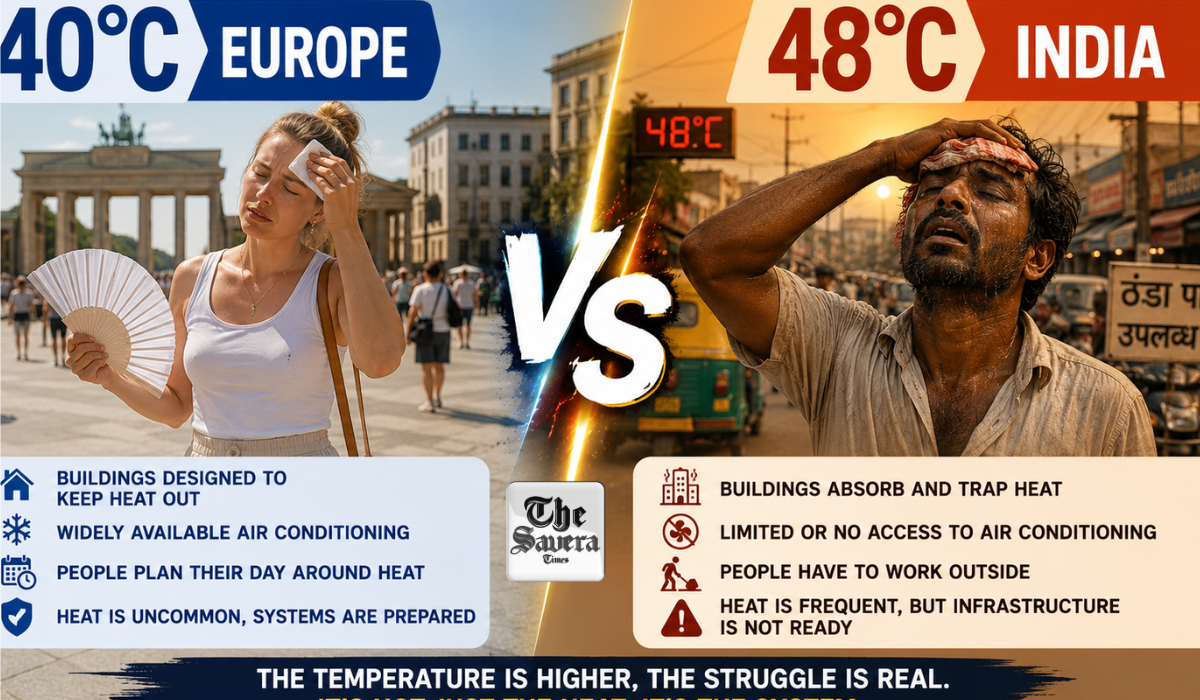
Europe is sweltering under a deadly heatwave, with temperatures hitting record highs of 40-41°C in places like Slovakia, Hungary, and Germany.
Over 1,000 extra deaths have been reported since late June, hitting the elderly hardest. Social media and headlines scream crisis. Yet in India, where 43-48°C is common in summer, people wonder: what’s the big deal? The answer lies not just in the thermometer, but in humidity, sunlight, bodies, buildings, and how places are built for their usual weather.
Sunlight Angle and Day Length
Europe sits much farther north than India. In summer, the sun strikes at a lower angle but stays up for 15-17 long hours. This lets roads, buildings, and ground soak up heat all day long. In India, near the equator, the sun is almost overhead—strong and direct—but daylight is shorter, around 12-13 hours. The sun feels sharper in clear European skies, while India’s pollution often scatters rays slightly.
Humidity: The Silent Killer
One of the biggest differences is humidity. In Europe, especially during still heatwaves with little wind, moist air makes sweat evaporate slowly. Your body’s main cooling system fails, so 43°C feels far hotter and more dangerous. Many parts of India face dry heat in peak summer (like northwest), where sweat evaporates fast and cools you better—even at 45-48°C. Humid Indian regions exist, but overall acclimatization helps.
Acclimatization and Human Adaptation
Indians living in hot zones are used to it. Bodies adapt by sweating more efficiently, starting earlier, and handling stress better after repeated exposure. Daily habits—light clothes, hydration, timing activities—help too. Europeans rarely face such extremes, so their bodies struggle more. Heat stress hits faster, especially kids and elderly. WHO notes Europe warms twice as fast as the global average.
Buildings and Infrastructure Trap Heat
European homes are built for cold winters: thick insulation, small windows, limited ventilation to keep warmth in. During heatwaves, they turn into ovens—even after sunset. Most lack fans or AC as standard. People are now rushing to buy portable coolers. Indian homes often use stone/tile floors, high ceilings, verandas, courtyards, and cross-ventilation designed to stay cool naturally. This keeps indoor temperatures lower.
Roads Melting: Engineering for Local Climate
UK and European roads melt or buckle at around 40°C because they use softer bitumen grades. These stay flexible in freezing winters (common there) but soften in rare summer heat. Surface temperatures on dark asphalt can hit 50°C+ even on milder days as they absorb sun. Indian roads use harder bitumen (like VG-30 or VG-40) built for intense, regular summer heat above 45°C. They prioritize heat resistance over cold flexibility. It’s smart local engineering, not better or worse quality.
Low Winds and Urban Heat
Europe’s heatwaves often bring calm air, trapping heat in cities. India’s heat frequently pairs with hot dry winds (northwest) or monsoon humidity, changing how it feels. Concrete-heavy European cities also radiate stored heat at night.
In short, same number on the thermometer doesn’t mean same experience. Europe’s rare extremes hit unprepared people, homes, and roads hard. India deals with heat routinely through adaptation and design suited to its climate. As climate change brings more records everywhere, both regions need better heat plans—actionable warnings, cooling centers, and resilient infrastructure. Understanding these differences helps explain the “rona dhona” and prepares us for hotter futures.
Imagine opening WhatsApp on your phone, but the SIM card linked to your account is not inside the...

Delhi’s air pollution is once again raising health concerns, with the Air Quality Index (AQI) entering the ‘poor’...
Ladakh is seeing two changes at once: a new district has been announced, and the Centre has proposed...

What if a decision taken in Washington could influence India’s oil bills, export earnings and trade relations with...

What happens when the world’s richest business leaders clash over one of the world’s biggest internet markets? A...

Pakistan is heading into its wheat-growing season with a serious water problem. The country is facing a projected...
Aries: The day will be auspicious...