Last Updated: October 21, 2026
Last Updated: October 21, 2026





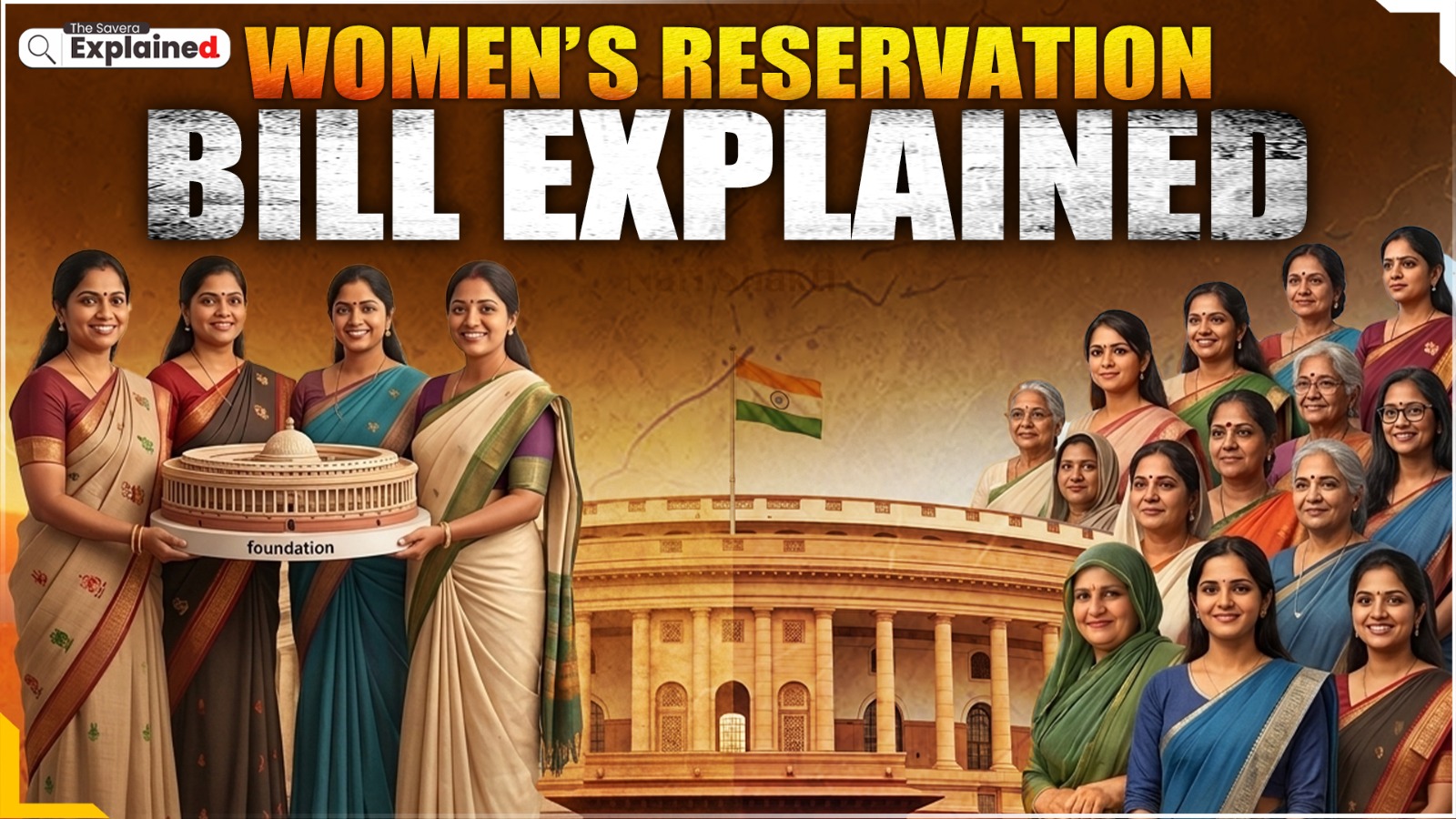
What begins as a reform for representation is fast turning into a test of India’s federal balance. The Women’s Reservation Bill promises to bring more women into politics — a long overdue step. But as Parliament debates its implementation, a deeper question is emerging: who gains power in a bigger, reshaped Lok Sabha?
The Core Idea: More Women in Power
The Nari Shakti Vandan Adhiniyam seeks to reserve 33% of seats in the Lok Sabha and state assemblies for women. Today, women hold only about 14% of seats in Parliament — a stark gap in a country where they make up nearly half the population.
The proposal is simple in intent:
At the grassroots level, similar reservations in panchayats have already shown positive results — better focus on welfare, education, and health. Extending this to higher levels of governance is widely seen as a necessary step.
The Delay: Why It Starts in 2029
Despite broad support, the bill does not take effect immediately. Its rollout depends on:
Delimitation redraws constituency boundaries based on updated population data. Only after this process will the reservation come into force, likely from the 2029 general elections.
This delay is crucial — because delimitation doesn’t just redraw maps, it reshapes political power.
The Bigger Plan: Expanding Parliament
The government has proposed increasing Lok Sabha seats from 543 to around 850. This expansion is meant to:
On the surface, it appears inclusive — everyone gets more representation. But the distribution of these new seats is where tensions arise.
The Faultline: Population vs Representation
India’s population growth has been uneven. Southern states like Tamil Nadu and Kerala have successfully controlled population growth through education and health policies. Northern states like Uttar Pradesh and Bihar, on the other hand, have larger and growing populations.
If seats are allocated strictly by population:
No state loses seats in absolute terms. But their share in Parliament changes, and that’s what shapes influence.
Why the South Is Concerned
For southern states, the issue is not numbers alone — it is about fairness. There is a growing perception that:
This creates a deeper concern about India’s federal balance. If one region’s influence rises significantly, national decisions may increasingly reflect that shift.
Government’s Position
The government argues that:
While this addresses absolute numbers, it does not fully answer concerns about relative power — which is what ultimately matters in Parliament.
Where the Real Tension Lies
The central issue is not the reservation itself. There is near-universal agreement on increasing women’s representation.
The tension comes from linking it to delimitation. If the quota had been implemented within the current 543 seats, the debate would likely remain limited. But by tying it to a larger restructuring, the bill now intersects with regional politics.
This has led to a key criticism:
A social reform is being combined with a structural power shift.
What Lies Ahead
The bill requires a two-thirds majority to pass. If approved, delimitation will follow, setting the stage for implementation in 2029.
The outcome will shape more than representation. It will influence:
The Women’s Reservation Bill is a necessary and progressive reform. But its design makes it more than that. It becomes a moment where India must carefully balance gender justice with regional equity.
It does not automatically create a North–South divide.
But it introduces pressures that could deepen one if not handled with care.
The real challenge is clear:
Can India expand representation without unsettling its federal balance?
The answer will define not just the success of this bill, but the future shape of Indian politics.
Ladakh is seeing two changes at once: a new district has been announced, and the Centre has proposed...

What if a decision taken in Washington could influence India’s oil bills, export earnings and trade relations with...

What happens when the world’s richest business leaders clash over one of the world’s biggest internet markets? A...

Pakistan is heading into its wheat-growing season with a serious water problem. The country is facing a projected...
Imagine a foreign national standing among Indian citizens at a political protest, raising questions about the government or...

For thousands of Indian tech workers in the United States, a job offer is only the beginning of...

Aries: The day will be auspicious...