Last Updated: October 14, 2026
Last Updated: October 14, 2026





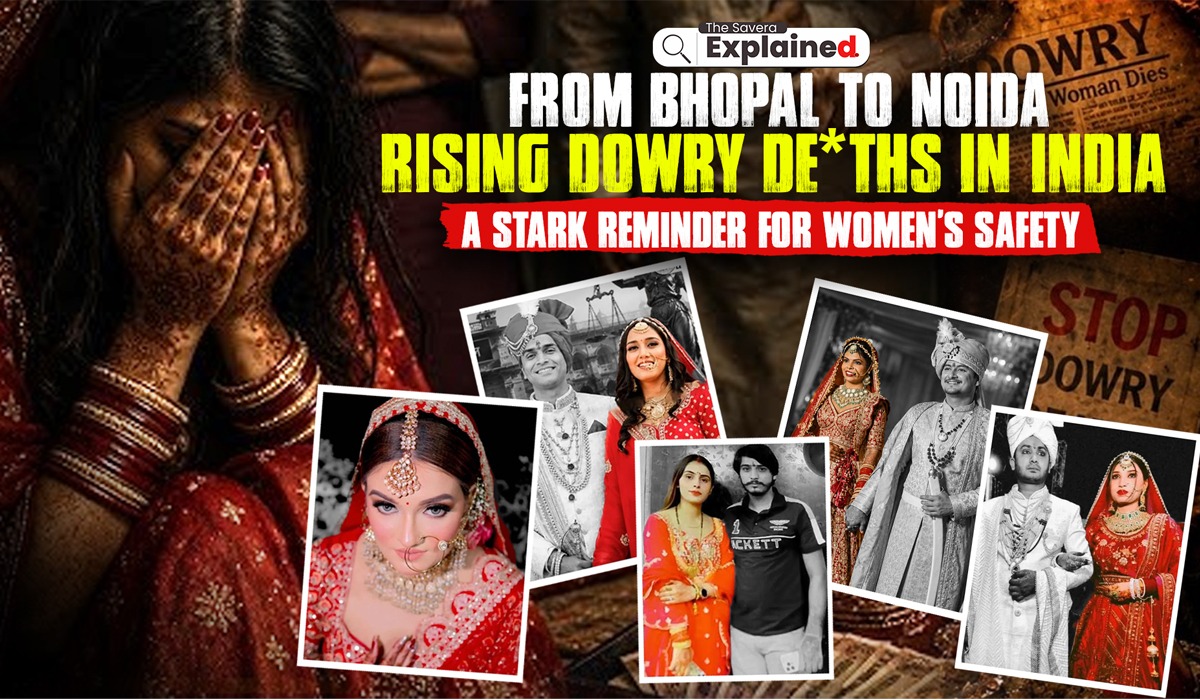
New Delhi: In recent weeks, India has witnessed several shocking deaths of young brides, once again raising serious questions about women’s safety after marriage. From alleged suicides to suspicious falls and burn cases, families across the country are accusing in-laws of harassment over dowry demands.
The incidents have sparked outrage and renewed debate over whether dowry is still silently destroying lives in 2026.
Recent Cases in Spotlight (Detailed)
Several recent cases have highlighted a disturbing pattern of alleged abuse and suspicious deaths linked to dowry harassment.
Kanchan (Agra, Age 22):
Kanchan married Shivam Verma in February 2026 in a love marriage reportedly against her family’s wishes. Within two months, she died under suspicious circumstances. Her family alleged that she was continuously harassed for ₹10 lakh and insulted over caste issues. They also claimed that her diary and mobile phone containing evidence disappeared after her death. Police registered a dowry death case against her husband, mother-in-law and brother-in-law, while Shivam Verma was arrested.
Twisha Sharma (Bhopal, Age 31-33):
Former model and MBA graduate Twisha Sharma was found hanging in her marital home in May 2026, only five months after her marriage to lawyer Samarth Singh. Her family accused her husband and mother-in-law, retired judge Giribala Singh, of mental and physical torture linked to dowry demands. They alleged Twisha was pregnant and forced to abort. Her husband remains absconding while her mother-in-law received interim bail. The family has demanded a second postmortem and a CBI investigation.
Deepika Nagar (Greater Noida, Age 24-25):
Deepika died after falling from the roof of her in-laws’ home in May 2026, around 17 months after marriage. Her family alleged repeated demands for gold and expensive gifts despite spending over ₹1 crore on the wedding. They claimed she had called home shortly before the incident in distress. The autopsy reportedly found severe internal injuries, leading her family to suspect murder. Police arrested her husband and father-in-law.
Palak Rajak (Gwalior, Age 21):
Social media influencer Palak Rajak died in May 2026 shortly after marriage. Before her death, she reportedly made a tearful call to her father alleging beatings and demands for a Brezza car despite heavy gifts already given during marriage. Her in-laws claimed suicide, while police began investigating her social media posts and family allegations.
Nikki Bhati (Greater Noida, Age 28):
In a 2025 case that remains widely discussed, Nikki Bhati allegedly died after being set on fire by her husband and in-laws over fresh demands for ₹36 lakh and a luxury car, despite nine years of marriage. Her four-year-old son reportedly witnessed the incident. Police later arrested multiple family members.
History of the Dowry System
The dowry system began in ancient India as voluntary gifts given to daughters to support them financially after marriage because women often did not inherit property. Over time, especially during medieval and colonial periods, dowry evolved into financial demands from the groom’s side.
Marriage increasingly became linked with status, money and social prestige. Even after Independence, dowry demands expanded to include cash, cars, jewellery and expensive goods.
India enacted the Dowry Prohibition Act in 1961, making dowry illegal. Laws such as Section 304B of the IPC, now under BNS Section 80, presume guilt in suspicious deaths of married women facing dowry harassment within seven years of marriage. Despite this, the practice continues because of social pressure, greed and weak implementation.
Statistical Data on Dowry Deaths
According to NCRB data, India recorded 5,737 dowry deaths in 2024 — nearly 16 women every day. Uttar Pradesh reported the highest number of cases, with more than 2,000 deaths.
In 2023, over 6,100 women reportedly died in dowry-related incidents. Experts believe many cases remain unreported, while conviction rates continue to stay low at around 30 to 35 percent.
Why This Matters
These incidents expose the continuing dangers many women face after marriage. Families often spend huge amounts on weddings hoping for their daughters’ happiness, only to later face allegations of harassment, violence or suspicious deaths.
Fear, social stigma and family pressure often stop women from speaking openly about abuse. These cases also highlight the importance of financial independence, awareness of legal rights and early reporting of harassment.
Experts say stronger policing, fast-track courts, better support systems and changes in social attitudes are essential to end dowry-related violence. Marriage should never become a financial transaction. Every woman deserves safety, dignity and justice.
Several high-altitude areas in Jammu and Kashmir have received the season's first snowfall in the past 24 hours....

Police have achieved a major breakthrough in the murder case of Punjab anti-drug activist Parvinder Singh Jhota. The...

Good Morning Viewers! Start your day with The Savera Times Morning Bulletin, bringing you the latest news from...

Cockroach Janata Party (CJP) workers Saurav Das and Ashutosh Ranka have been sent to five-day judicial custody after...
Abhijeet Deepak, founder of the political satire movement Cockroach Janata Party (CJP), shared a photo on Wednesday, allegedly...
Sharadiya Navratri is a sacred festival in Indian culture that celebrates strength, faith, spiritual practice and self-purification. Worshipping...

Aries: The day will be auspicious...