Last Updated: September 24, 2026
Last Updated: September 24, 2026





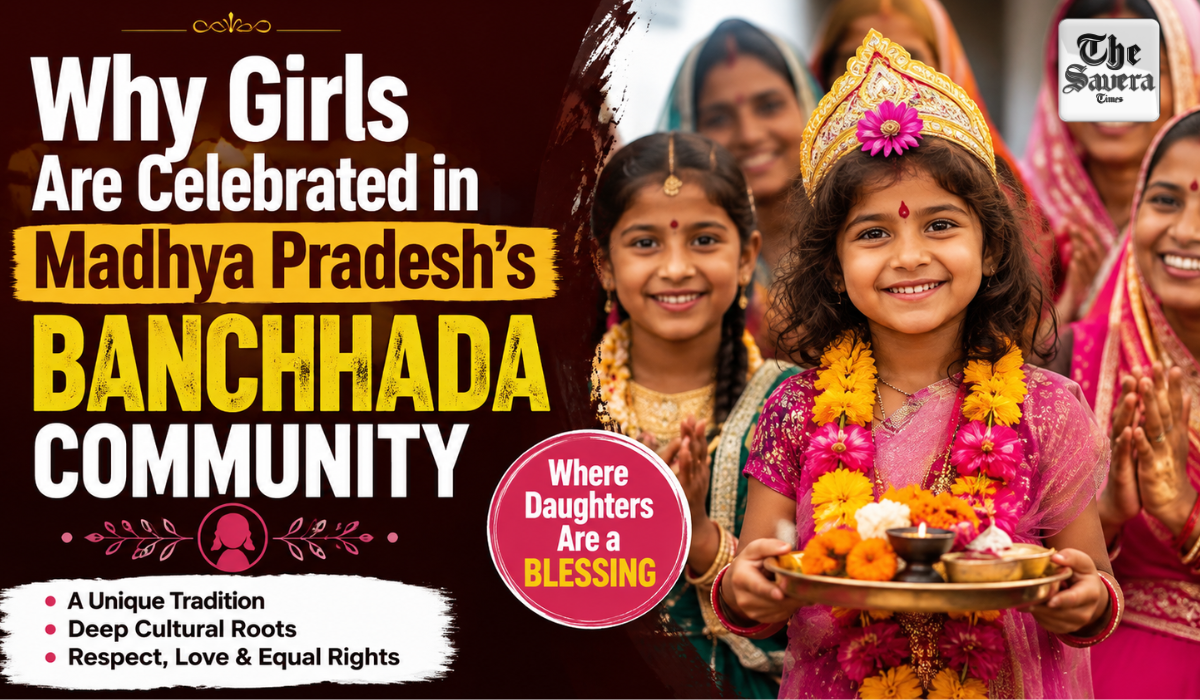
In a land where many families still prefer sons, one community in Madhya Pradesh throws celebrations when a girl is born. The reason is chilling. They see her not as a child to raise with care, but as a future earner through sex work.
The Banchhada community lives mainly in about 75 to 78 villages across Ratlam, Mandsaur and Neemuch districts in western Madhya Pradesh. Estimates put their population between 23,000 and 25,000. Women form around 65 percent of the community. Surveys have repeatedly shown more women than men. In Mandsaur in 2015, one study counted 2,243 women against 1,192 men across 38 villages. In Neemuch in 2012, figures stood at 3,595 women and 2,770 men.
Background and History
The Banchhadas were once a nomadic group in the Malwa and Mewar regions, covering parts of present-day Madhya Pradesh and Rajasthan. Under British rule, the community was branded a “criminal tribe” under the Criminal Tribes Act of 1871
This label brought constant police checks, restricted movement and harsh treatment. After Independence, the Act was repealed in 1952. The community became a denotified tribe and is now listed as a Scheduled Caste.
The practice of family-based prostitution has deep roots. Community elders and activists say it grew during the colonial period. Police often arrested men and demanded women or money for their release. Families without cash began sending unmarried girls.
Over time, this hardened into a social custom. Male members of the family often act as pimps. Girls receive better food and clothes than boys. They are prepared for the trade from a young age, usually pushed into it around puberty, between 12 and 14 years.
The Practice Today
Birth of a girl is marked with joy because she is expected to become the family’s main breadwinner. Sex work has social acceptance within the community. Many women work along highways, in roadside deras or temporary shelters, catering to truck drivers and travellers. Some travel to nearby cities on client requests. Families live off their earnings. Marriage rules inside the community also place heavy burdens on women. Men often demand large sums for marriage, money that is earned by the groom’s sisters through the same trade.
Trafficking and Recent Cases
The demand for more girls has fuelled trafficking. Families buy young girls, including newborns, from other parts of Madhya Pradesh and beyond. Prices reported in earlier cases ranged from a few thousand to around Rs 10,000.
In one 2014 raid in Neemuch, police found a six-year-old girl who had been purchased in 2009 from Nagda in Ujjain district. The deal was recorded on a Rs 500 stamp paper.
The woman involved was arrested for trafficking. Organised networks of middlemen help in these purchases. Once the girls grow up, they are forced into the trade. Activists estimate that thousands of women and girls from the community remain trapped.
One recent assessment put the number of women in the trade at around 10,000, including about 3,000 girls.
Efforts and Challenges
Police, the state government and NGOs have tried to break the cycle. Schools, awareness drives, skill training and schemes such as the Jabali programme were introduced. Some youth have cleared police exams and other competitive tests in recent years. A few women have left the trade and found other work. Self-help groups and education centres run by NGOs offer alternatives.
Yet progress remains slow. Stigma, lack of steady alternative income, caste certificate hurdles for children born outside formal marriages, and community pressure keep many trapped.
A public interest litigation filed in the Madhya Pradesh High Court in 2017 seeking an end to highway prostitution is still pending.
The Banchhada story shows how a colonial label, poverty and accepted custom can lock an entire community into exploitation for generations.
Girls are celebrated at birth only to be prepared for a life that strips them of choice and dignity. Breaking this cycle needs more than raids. It needs sustained education, real livelihood options, easier access to identity documents, and social support that reaches every family.
A voter list revision — and now a software controversy A voter may have the right to vote,...

A conflict already threatening the Strait of Hormuz is now putting another crucial waterway in the spotlight —...

Petrol pump dealers across India are threatening a sweeping “cash-only” strike for high-value fuel purchases, alongside multi-party-political protests,...

A rate decision in Washington may sound far removed from an Indian household, but it can travel quickly...

For years, the biggest test in India-China ties was the border. Now, as both countries try to bring...

Copper has crossed a level never seen before, while Brent crude has moved back above $100 a barrel....

Aries: The day will be auspicious...