Last Updated: September 22, 2026
Last Updated: September 22, 2026





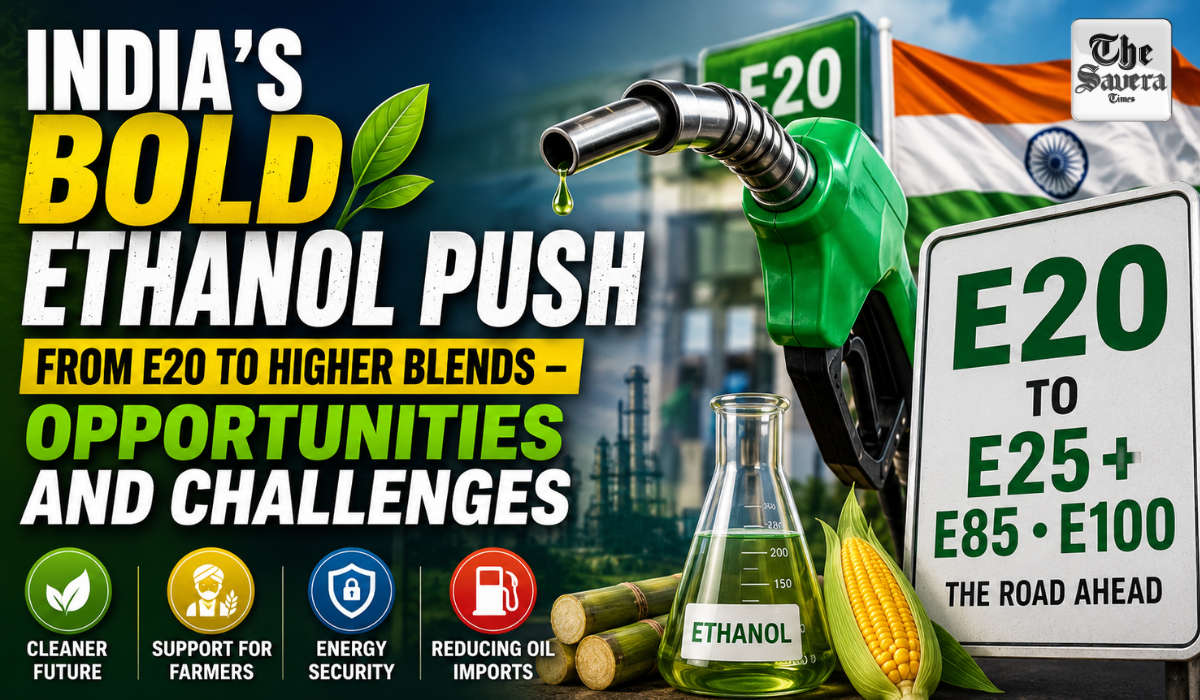
India’s fuel story is entering a new chapter.
After successfully introducing E20 petrol across the country, the government is now preparing for even higher ethanol blends. The aim is simple — reduce dependence on imported crude oil, support Indian farmers and strengthen the country’s energy security.
The government has recently exempted ethanol blends between 22 and 30 percent from central excise duty, putting them on par with E20 fuel. It has also proposed recognizing E85, which contains 85 percent ethanol, and E100, which is pure ethanol, under motor vehicle rules.
But while the move promises several benefits, it also raises important questions for vehicle owners and automobile manufacturers.
India’s Ethanol Journey So Far
India imports nearly 88.5 percent of its crude oil requirements. This makes the country vulnerable to global oil price fluctuations and geopolitical tensions.
To reduce this dependence, India started the Ethanol Blended Petrol Programme in the early 2000s. Initially, petrol contained just 5 percent ethanol in select states.
Over the years, the programme expanded steadily. Ethanol blending increased from around 1.5 percent in 2013-14 to 10 percent in 2022.
In 2025, India achieved its E20 target — meaning petrol now contains up to 20 percent ethanol. This target was achieved five years ahead of schedule.
According to government data, the programme has helped save nearly ₹1.91 lakh crore in foreign exchange, reduced carbon emissions and generated more than ₹1.62 lakh crore in payments to farmers.
Now, the government is looking beyond E20 and preparing for the next stage of the transition.
Why Move Beyond E20?
The main objective is to reduce oil imports even further.
Higher ethanol blending means a larger share of fuel can be produced within the country using crops such as sugarcane. This can strengthen India’s energy security and reduce pressure on the import bill.
The move is also expected to benefit farmers, especially in major sugarcane-producing states like Maharashtra and Uttar Pradesh.
In addition, it supports India’s clean energy goals and aligns with the National Policy on Biofuels.
Oil Marketing Companies are expected to introduce higher blends gradually, giving consumers and industries time to adapt.
Concerns for Consumers
While the benefits are attractive, many consumers have concerns.
One major issue is vehicle compatibility. Ethanol absorbs moisture more easily than petrol and can be corrosive to certain engine parts. Older vehicles and two-wheelers that were not designed for higher ethanol blends may face problems over time.
Another concern is mileage. Many vehicle owners reported a drop in fuel efficiency after the shift from E10 to E20. Experts believe the impact could become more noticeable if ethanol content increases further.
There are also concerns about engine performance, especially during cold weather. Vehicles not designed for high-ethanol fuel may experience starting difficulties or reduced performance.
Many consumers are also worried about having limited fuel choices at petrol pumps.
Challenges for Carmakers
The automobile industry is also preparing for the transition.
Manufacturers may need to redesign or recalibrate engines, conduct fresh testing and obtain new certifications for higher ethanol blends.
These changes involve additional costs, which could eventually affect vehicle prices.
Automakers are therefore seeking a phased rollout, better infrastructure and long-term policy clarity before large-scale adoption.
The government, however, says adequate testing and standards are being put in place to ensure a smooth transition.
What Can India Learn from Brazil?
When it comes to ethanol fuel, Brazil is often considered the global benchmark.
Following the oil crisis of the 1970s, Brazil launched an ambitious ethanol programme based on sugarcane production.
Today, Brazilian consumers can choose between regular petrol blends and pure ethanol fuel. The country also introduced flex-fuel vehicles that can run on any combination of petrol and ethanol.
Flex-fuel cars dominate Brazil’s market, and the transition was supported through government incentives, consumer awareness and a phased implementation strategy.
India is closely studying Brazil’s experience as it charts its own ethanol roadmap.
The Road Ahead
India’s ethanol push is not just about fuel. It is about energy security, environmental sustainability and rural prosperity.
As the country moves towards E25 and possibly even higher blends, success will depend on vehicle readiness, fuel availability, consumer awareness and affordable pricing.
If planned carefully, the shift could reduce oil imports, strengthen farmer incomes and help India build a cleaner and more sustainable energy future.
The journey has begun. The next question is — how smoothly can India drive into its high-ethanol future?
A conflict already threatening the Strait of Hormuz is now putting another crucial waterway in the spotlight —...

Petrol pump dealers across India are threatening a sweeping “cash-only” strike for high-value fuel purchases, alongside multi-party-political protests,...

A rate decision in Washington may sound far removed from an Indian household, but it can travel quickly...
For years, the biggest test in India-China ties was the border. Now, as both countries try to bring...

Copper has crossed a level never seen before, while Brent crude has moved back above $100 a barrel....

For years, the Samajwadi Party’s electoral identity in Uttar Pradesh was closely linked to the Muslim-Yadav, or MY,...

Aries: The day will be auspicious...