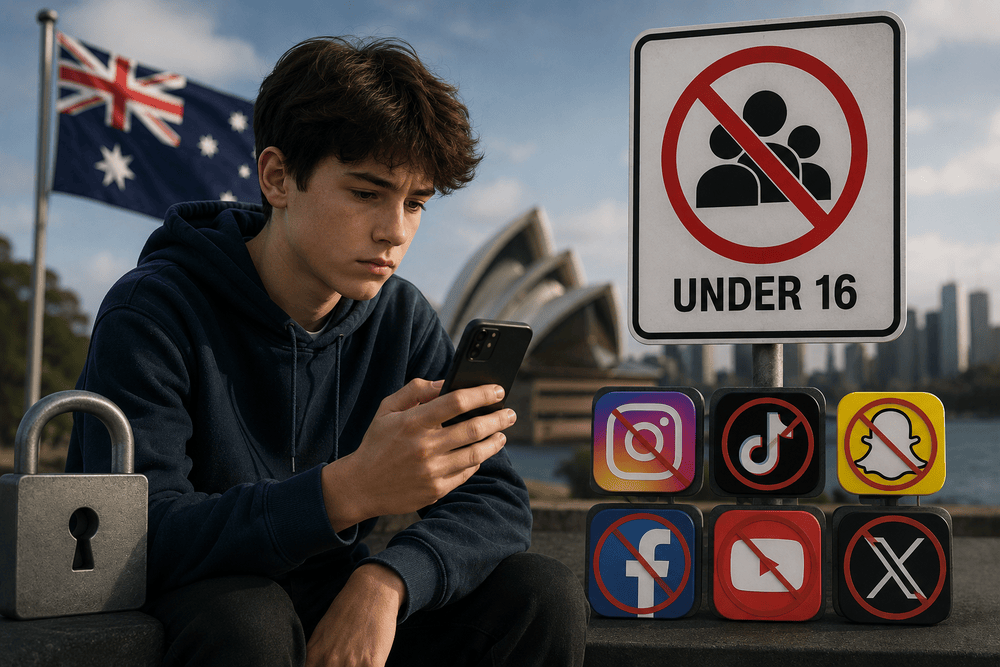
Australia’s world-first social media age restrictions for users under 16 have had only a limited early impact on adolescent social media use. Researchers found that more than 85 per cent of under-16 users continued to access restricted platforms. Many adolescents used their own accounts, while others relied on alternative or shared accounts to bypass restrictions..
A fresh debate on children’s online safety has emerged in India after the governments of Karnataka and Andhra Pradesh proposed restrictions on social media access for minors. The issue gained momentum after Karnataka Chief Minister Siddaramaiah announced during the 2026–27 state budget that social media would be banned for children under the age of 16.
Amaravati: Andhra Pradesh Chief Minister N. Chandrababu Naidu said on Friday that the state government will ban use of social media for children under the age of 13 years and that a decision on whether to bar children in 13-16 age group from using social media will be taken after arriving at a consensus. Ban.
In a landmark move aimed at protecting children from the harmful effects of excessive screen time, the government of Karnataka has announced a ban on social media use for children below the age of 16. The decision was revealed by Karnataka Chief Minister Siddaramaiah during the presentation of the 2026–27 state Budget in the legislative.
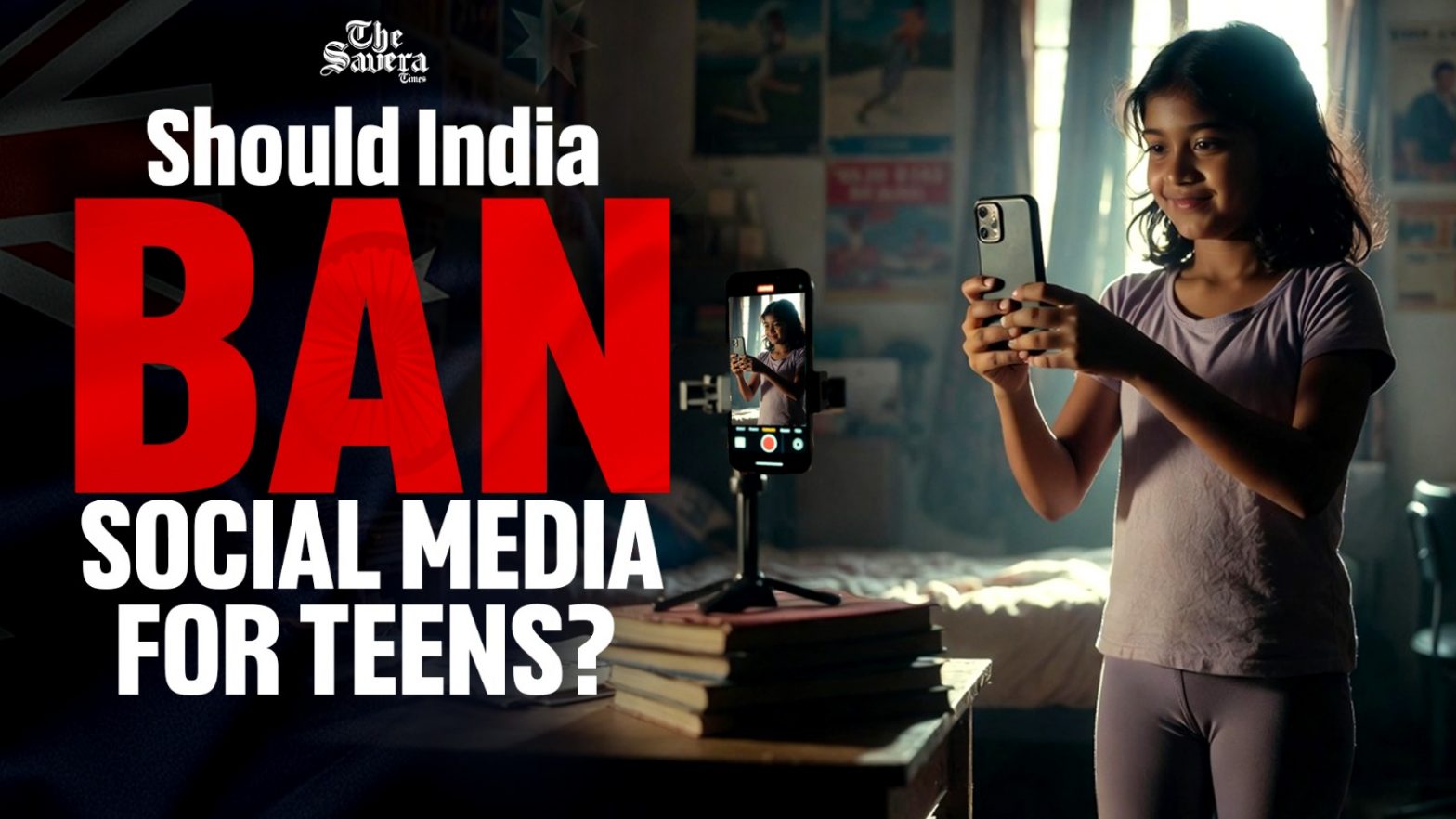
Scrolling, swiping, streaming — today’s childhood is happening on a screen. But as India’s Economic Survey sounds the alarm on rising digital addiction and mental health risks among the young, a big question is surfacing: Should India draw a legal line on teen social media use, like Australia just did? What’s at stake isn’t just.
Mumbai, Dec 13: Bollywood couple Sonakshi Sinha and Zaheer Iqbal publicly supported the idea of a social media ban for children in India, citing concerns over online safety and the wellbeing of young users. Their comments came during a panel discussion held at the MET College in Mumbai, where the topic was whether India should.
Under laws that were passed the federal parliament in November 2024, certain social media platforms must take "reasonable steps" to prevent children under 16 from having accounts.
As concerns deepen over young people’s mental health, online safety and rising digital dependency, governments across several continents are considering a major step that could reshape how minors interact with technology. Lawmakers in Europe, Australia and parts of Asia are now pushing for a ban on social media access for all users under the age.
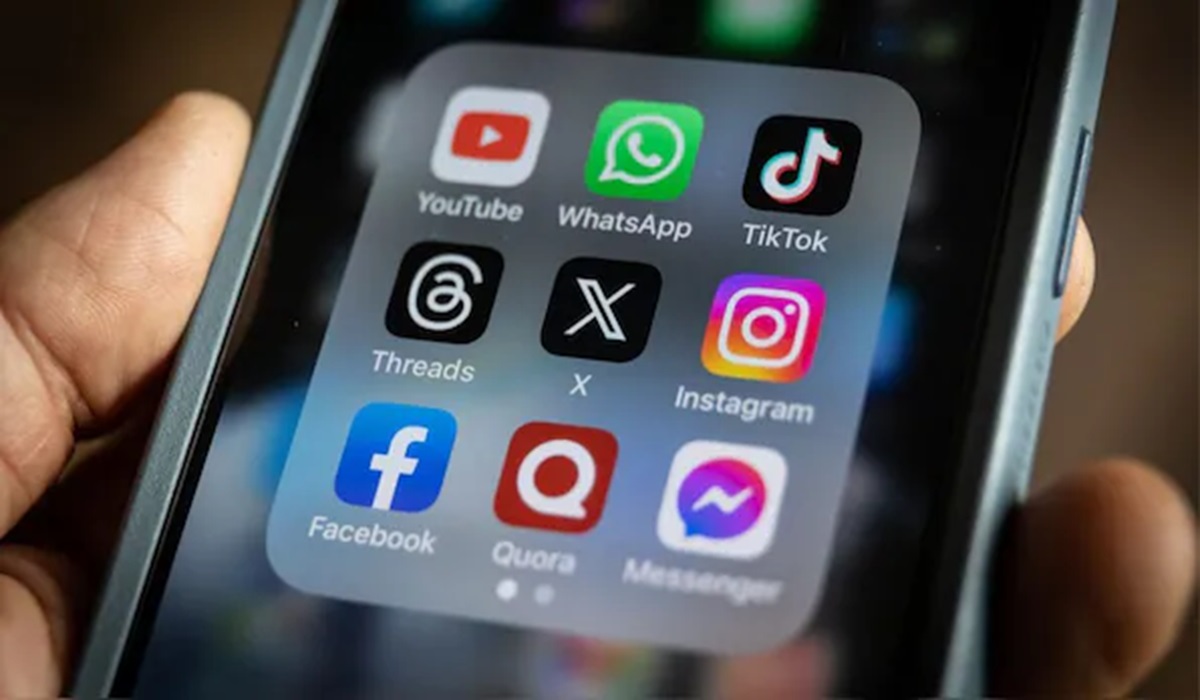
Global internet monitor Netblock said on Monday that access to online platforms including X (formerly Twitter), YouTube, Instagram, Facebook, TikTok and WhatsApp has been restricted on several networks in Turkey.
Sydney: Nearly half of Australian internet users have fallen victim to cybercrime in the past 12 months, according to a new government report released on Thursday. The report, compiled by the Australian Institute of Criminology (AIC), surveyed more than 10,000 internet users across the country. It found that 47.4 per cent of respondents had experienced.