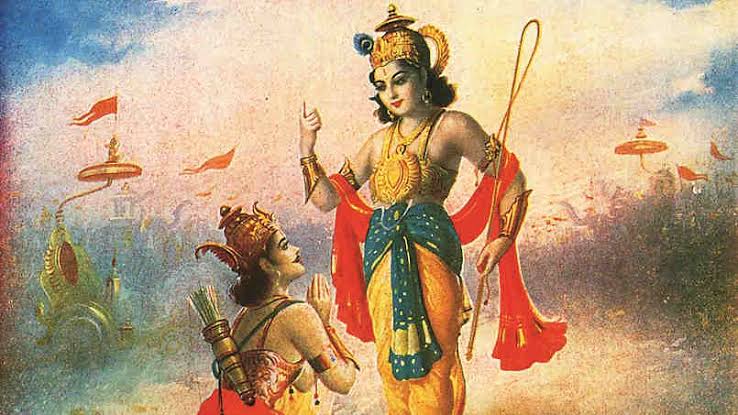
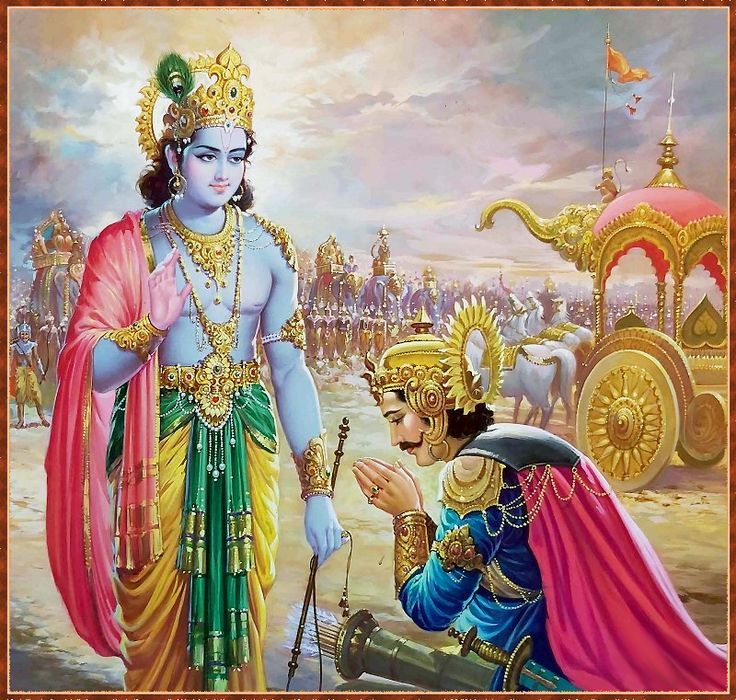
Lord Krishna explains that true spiritual wisdom lies not in abandoning action, but in performing one’s duties without attachment to their outcomes. In the Bhagavad Gita, he emphasises that a person who acts with a calm and balanced mind can attain inner purity, lasting peace and freedom from bondage. In Chapter 5, Verse 11, Krishna.
Concepts such as “Anasakti” (nonattachment) and “Veetarag” (freedom from attachment and aversion) lie at the core of the Gita’s teachings. While attachment (aasakti) and detachment (virakti) represent two poles, “Zanasakti” signifies transcending these very poles. Similarly, “Zveetarag” is neither attachment nor aversion, but something that lies beyond both. These polarities are merely reflections of the.
The question of vikarma (forbidden action) or sin is a complex one. Arjuna faces this dilemma and states that killing one's relatives in battle would be a sin (1.36).
Geeta Aahoron A hungry fox tried to reach grapes hanging overhead; failing to do so, it concluded that the grapes were sour. This familiar story offers various perspectives on dealing with disappointment, contentment, and happiness. Contemporary psychology describes the ‘synthesis of happiness’ as a function of the human brain that helps us navigate difficult situations..
Through the medium of the senses, the mind, and the intellect, this desire obscures knowledge and thereby deludes the “Jivatma” (the individual soul).”