Last Updated: September 19, 2026
Last Updated: September 19, 2026





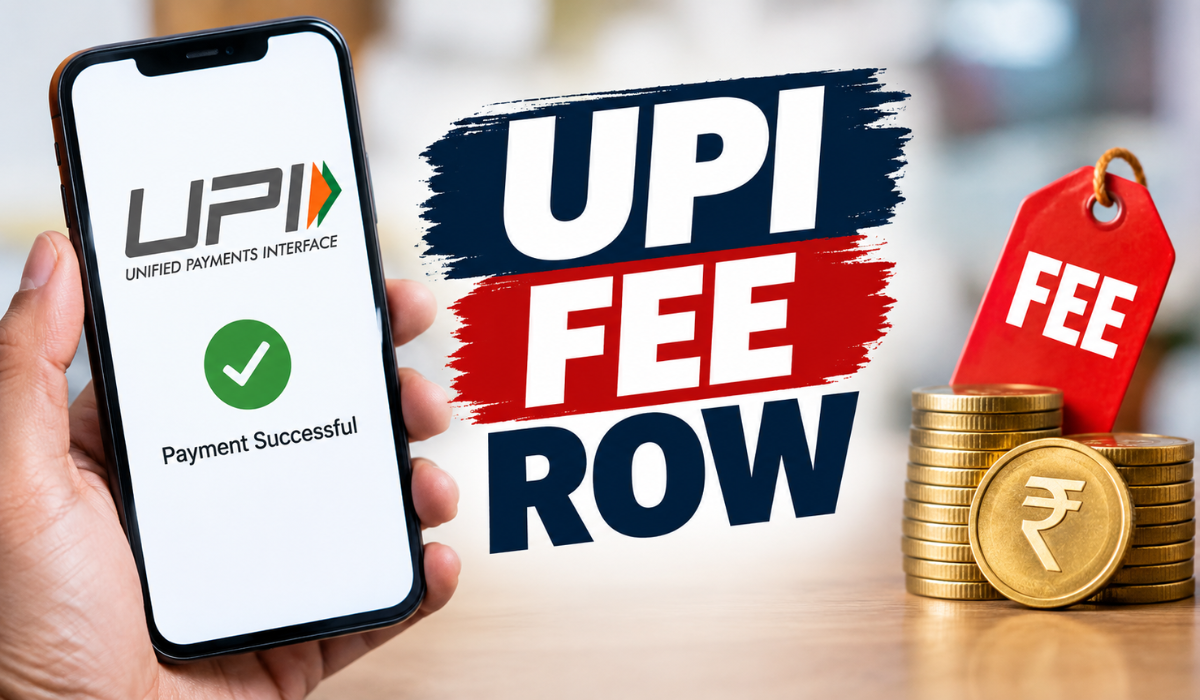
Petrol pump dealers across India are threatening a sweeping “cash-only” strike for high-value fuel purchases, alongside multi-party-political protests, in response to the newly introduced UPI Merchant Discount Rate (MDR) rules.
From October 15, 2026, eligible UPI merchant transactions above ₹2,000 will attract an MDR of 0.4%, capped at ₹300. For fuel purchases, however, a special flat ₹5 MDR will apply to transactions above ₹2,000.
While customers will not directly pay the fee, petrol dealers say the additional cost could hit their already tight margins.
MP Petrol Pumps Lead ‘No UPI’ Protest
Madhya Pradesh has emerged as a major flashpoint. The Madhya Pradesh Petroleum Dealers Association has announced that around 4,700 petrol pumps will stop accepting UPI payments for fuel bills above ₹2,000 from October 15.
Dealers in other parts of the country have also raised objections. Associations in Mumbai and other states have sought an exemption for fuel transactions, warning that they may restrict UPI payments if their concerns are not addressed.
The protests have now extended beyond petrol dealers. In Punjab, Aam Aadmi Party workers staged demonstrations against the new charges, arguing that the move could hurt traders and weaken India’s digital-payment ecosystem.
Political Battle Over ‘Modi Tax’
The UPI charge has also become a political flashpoint.
Leader of Opposition Rahul Gandhi has called the proposed fee a “Modi Tax” and accused the government of “surrendering to US pressure”. He has argued that charging merchants could undermine the country’s widely used digital-payment system.
The government has rejected calls for a rollback. Its position is that the new MDR is needed to create a sustainable financial model for UPI as transaction volumes continue to grow.
The Centre has also pointed to recommendations from Parliament’s Standing Committee on Finance, which had examined the need for a sustainable revenue model for India’s digital-payment infrastructure.
Why Are Petrol Dealers Angry?
The dispute comes down to simple arithmetic.
Fuel dealers work on relatively tight commissions. Reported dealer margins are around ₹2.40 to ₹3.40 per litre, depending on the fuel and other factors. A flat ₹5 charge on a high-value digital transaction therefore becomes an additional cost that dealers say they cannot easily absorb.
The problem is that fuel purchases regularly cross ₹2,000. A full tank for a car or SUV can reach the threshold, while commercial vehicles can cross it much more easily.
Dealer associations are demanding that oil marketing companies such as Indian Oil, BPCL and HPCL absorb the digital-payment cost rather than passing it on to dealers.
There is also an irony in the proposed shift back to cash. UPI has helped petrol stations reduce the need to handle, store and transport large amounts of physical money. Returning to cash could mean higher security and cash-management costs for dealers.
How Will The New MDR Work?
The government has clarified that the MDR is not a tax collected by the government or NPCI.
Under the new framework, person-to-person UPI transfers will remain free. Merchant payments up to ₹2,000 will also remain free, while transactions covered by the zero-MDR framework for small merchants will not attract the charge.
The government says around 96% of person-to-merchant transactions will remain unaffected.
For specified categories, including fuel, the MDR above ₹2,000 will be a flat ₹5. For other eligible merchant transactions above ₹2,000, the rate will be 0.4%, subject to the applicable cap.
The money will be distributed among participants in the payment ecosystem to support payment infrastructure, operations, resilience and innovation.
What Could Happen To Customers?
Customers will not directly pay the MDR, but they could still feel its effects.
The immediate concern is inconvenience. If petrol pumps refuse UPI for bills above ₹2,000, customers may have to use cash or cards. Someone arriving at a fuel station without either option could face delays or be forced to find an ATM.
Splitting a large payment into smaller transactions could also create operational complications and longer queues, depending on how individual merchants implement the rules.
There is also concern that businesses could eventually try to recover higher payment costs through their overall pricing. That could create indirect price pressure, although it is too early to say that the MDR itself will significantly increase inflation.
What Happens Next?
The new MDR framework is scheduled to take effect from October 15. Petrol dealer associations are seeking exemptions or relief, while the government has so far defended the policy.
The key question is whether merchants will absorb the new cost or reduce their acceptance of UPI for high-value payments.
For customers, UPI remains free. But if more merchants choose cash or alternative payment methods for transactions above ₹2,000, the change could mark a significant shift in how Indians make everyday high-value payments.
A rate decision in Washington may sound far removed from an Indian household, but it can travel quickly...
For years, the biggest test in India-China ties was the border. Now, as both countries try to bring...
Copper has crossed a level never seen before, while Brent crude has moved back above $100 a barrel....

For years, the Samajwadi Party’s electoral identity in Uttar Pradesh was closely linked to the Muslim-Yadav, or MY,...

Think of an electric car, a solar power plant or a battery storage system. At the centre of...
US President Donald Trump has once again put one of Iran’s most secretive underground sites in the spotlight....

Aries: The day will be auspicious...