At a time of rapid change, Indian society continues to demonstrate resilience through collective action and community-driven solutions. Across regions, people are coming together to address shared challenges, redefining what progress means at the grassroots level. Local initiatives—whether women’s self-help groups, youth collectives, or volunteer networks—are solving problems through cooperation rather than dependency. These efforts.
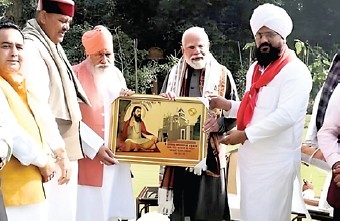
Prime Minister Narendra Modi’s scheduled visit to Dera Sachkhand Ballan in Jalandhar on February 1, 2026, to mark the 649th birth anniversary of Guru Ravidas, alongside the recent conferment of the Padma Shri on Sant Niranjan Dass, the dera’s head, signals a meaningful step towards acknowledging one of India’s most profound voices of social justice..
Sheena Sandhu A retired civil servant For nearly two decades, the Mahatma Gandhi National Rural Employment Guarantee Act (MGNREGA) served as the primary safety net for rural India. It was a landmark in legislative history—the first time a “right to work” was codified into law. However, as the 2026 Economic Survey recently noted, the overall.
India’s transformation is often narrated through the skylines of its megacities—Delhi, Mumbai, Bengaluru, and Hyderabad. Yet, beyond these urban giants, a quieter but equally significant change is unfolding in small towns and semi-urban regions. These towns, once defined by limited opportunities and outward migration, are increasingly becoming centers of aspiration, enterprise, and social mobility. One.
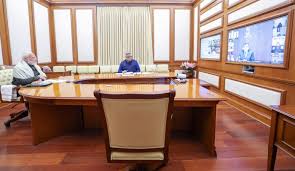
T.K. Ramachandran Ex Secretary, Ministry of Ports Shipping and Waterways Two path-breaking interventions by the Government have had a great impact on planning, execution and monitoring of large projects – PM Gati Shakti and PRAGATI. We look at the latter in this piece. The 50th high-level review under the PRAGATI (Pro-Active Governance and Timely Implementation).
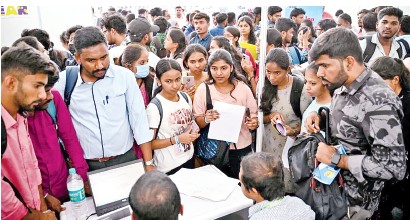
Across Indian cities, a quiet shift is reshaping the streets. University graduates, diploma holders, and postgraduates are increasingly visible in informal jobs once associated with low educational requirements. From running street food carts to driving app-based taxis and selling goods on pavements, educated youth are redefining survival in an economy that has failed to generate.
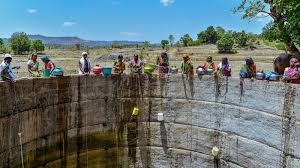
Groundwater is the invisible backbone of daily life across much of South Asia. It irrigates fields, fills household taps, and sustains cities that have outgrown surface water supplies. Yet beneath the ground, a silent crisis is unfolding. Aquifers are being depleted faster than they can recharge, threatening water security for millions. The expansion of groundwater.
Dr Kinny Garg Associate Professor AMC Engineering College Bengaluru Wearable health technology has quickly evolved from a niche innovation into a daily lifestyle companion. Smartwatches, fitness bands, and health patches now track heart rate, sleep patterns, physical activity, stress levels, and other key health metrics. While these devices promise improved health awareness and preventive care,.
K SIVA PRASAD Retired senior IAS officer in the Punjab Government Throughout human history, wise men and spiritual thinkers have guided humanity in its search to understand the inner self and the nature of ultimate reality. Interestingly, this guidance has largely emerged from two complementary approaches. One begins from the positive, the other from the.
The way people consume information has changed dramatically over the past decade. Short videos, rapid scrolling, and constant notifications now dominate daily life. In this environment, reading—especially long-form reading—often feels like a fading habit. Yet, its importance has not diminished. In fact, reading may matter more now than ever before. Reading is one of the.
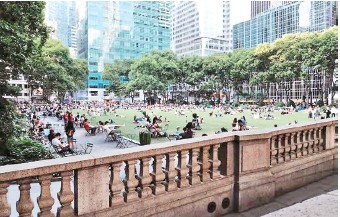
Public spaces—parks, streets, markets, libraries, and community squares—are often taken for granted. Yet, they play a critical role in shaping how societies function and how people relate to one another. In an age marked by increasing isolation, privatization, and digital interaction, public spaces are becoming more important than ever. At their simplest level, public spaces.