Food travels long distances before reaching modern consumers. While this globalized system has increased variety and convenience, it has also exposed vulnerabilities related to sustainability, nutrition, and resilience. As a result, local food systems are gaining renewed attention across the world. Local food systems emphasize producing, processing, and consuming food within a defined region. This.
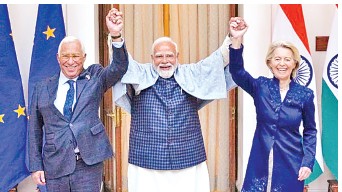
At a time when the global economy is being shaken by wars, rising tariffs and growing uncertainty, India has chosen to respond not with hesitation, but with quiet confidence. The message from New Delhi is clear – India is open for business and firmly sure of its economic direction. The long-awaited India-European Union Free Trade.
Parneet Sachdev Chairman of Real Estate Regulatory Authority and a leading author When the sense of smell enters the law of trademarks, a subtle but profound shift begins: intangible aromas, once considered purely experiential, now count as brand capital. The recent decision by the Trade Marks Registry, India (under the Trade Marks Act, 1999) to.
For much of the twentieth century, work was more than a means of income — it was identity. People introduced themselves by their professions, planned lives around careers, and measured success through job titles. That relationship is now being renegotiated. Across industries and age groups, individuals are questioning how much of their identity should be.
Productivity has become a defining value of modern life. From time-tracking apps to self-help books promising peak performance, the pursuit of doing more in less time dominates personal and professional spaces. But beneath this obsession lies a complex psychological dynamic worth examining. At its core, productivity offers a sense of control. In uncertain environments, measurable.
When people think about health and wellbeing, they often imagine dramatic changes — strict diets, intense workouts, or complete lifestyle overhauls. In reality, long-term wellbeing is shaped less by grand resolutions and more by small, repeated habits that quietly influence daily life. These habits rarely attract attention because they seem ordinary. Drinking enough water, getting.
For much of modern history, education followed a linear path. People studied when young, worked for decades, and retired with the skills they had acquired early in life. That model is rapidly becoming outdated. In today’s world, lifelong learning is no longer a choice but a necessity. Technological change is one of the biggest drivers.
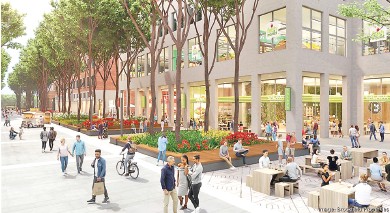
Public spaces — parks, streets, libraries, markets, and plazas — form the social backbone of cities. They are the places where daily life unfolds outside private homes and workplaces. As cities grow denser and faster, the importance of these shared spaces has become increasingly clear. Well-designed public spaces promote inclusion. They are among the few.
Modern storytelling often celebrates turning points breakthroughs, victories, moments when everything changes. But most lives are not shaped by dramatic events. They are shaped by routine. By ordinary days repeated quietly over time. Increasingly, people are recognising that stability, consistency, and daily structure are not signs of stagnation, but sources of strength. Routine gives life.
For decades, society promoted the idea that learning peaks early. Education was seen as something completed in youth, after which life followed a fixed path. That belief is now steadily breaking down. Across different professions and age groups, people are returning to learning — not out of crisis, but out of curiosity, relevance, and personal.
Success is often portrayed as a sudden breakthrough — a big moment, a viral achievement, or a dramatic turning point. In reality, most progress is built through repetition, patience, and consistency. Quietly, a growing number of people are redefining success not by speed or scale, but by sustained effort over time.Consistency does not attract attention.