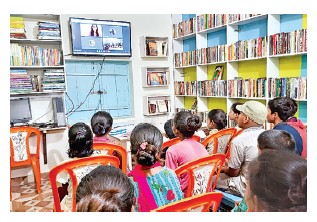
Across rural India, a quiet transformation is underway—one driven not by sweeping headlines or grand policy announcements, but by community innovation and local leadership. From renewable energy initiatives to grassroots education models, villages are demonstrating how sustainable development can take root when people shape solutions for themselves. In many parts of the country, access to.
Across India, a quiet transformation is underway—one powered not by noise or spectacle, but by sunlight, wind, and local innovation. From rooftops in small towns to solar parks stretching across arid landscapes, renewable energy is increasingly shaping how millions of Indians live, work, and dream about the future. Over the last decade, India has emerged.
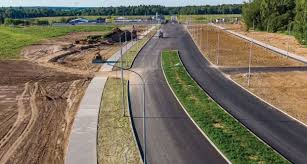
Vinayak Pai Chairman of Confederation of Indian Industry (CII) Maharashtra and Chairman of the National committee of Roads & Highways Over the last decade, India’s infrastructure landscape has undergone a structural transformation one that extends well beyond asset creation to the very architecture of governance and delivery. What distinguishes this phase from earlier cycles is.
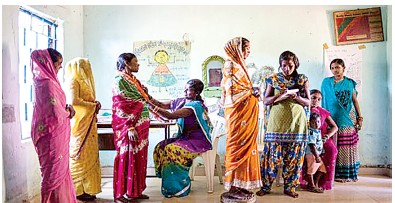
In many parts of India, the first point of contact between citizens and the healthcare system is not a hospital or a doctor, but a local health worker. Accredited Social Health Activists (ASHAs), auxiliary nurse midwives, and community health volunteers form the backbone of primary healthcare, quietly delivering life-saving services to millions, often under challenging.
On a quiet evening in a small town in Uttar Pradesh, a group of children sit cross-legged on the floor of a modest room, lost in storybooks. Some are reading aloud, others whispering lines to themselves, their fingers tracing words with care. This scene is increasingly common across India, thanks to a growing network of.
Across India, a new generation of entrepreneurs is redefining success by aligning business goals with environmental responsibility. From biodegradable packaging startups to solar-powered irrigation solutions, green entrepreneurship is emerging as a powerful force for positive change, proving that economic growth and sustainability can go hand in hand. The rise of green startups is closely linked.
Dr sharad S chauhan IPS DGP and Managing Director, Punjab Police Housing Corporation In the high-stakes laboratory of the streets, a police officer becomes an involuntary expert in the mechanics of human distress. When a person is pushed into a state of extreme stress, the sophisticated, rational parts of the brain often go offline, leaving.
Vinayak Pai Chairman of Confederation of Indian Industry (CII) Maharashtra and Chairman of the National committee of Roads & Highways Over the last decade, India’s infrastructure landscape has undergone a structural transformation—one that extends well beyond asset creation to the very architecture of governance and delivery. What distinguishes this phase from earlier cycles is not.
Kindness is often treated as a soft virtue—pleasant but optional, admirable but secondary to ambition, power, or success. In public discourse, we tend to focus on grand ideas and dramatic change, overlooking the small acts of consideration that quietly sustain everyday life. Yet ordinary kindness, practiced consistently, may be one of the most powerful forces.
Savitri Thakur Minister of State for Women and Child Development, Government of India India is a rich country with diverse cultural traditions and livelihoods, home to a scheduled tribe population exceeding 10.45 crore, constituting about 8.6% of the total population. This figure is not just a demographic statistic but represents a unique expression of India’s.
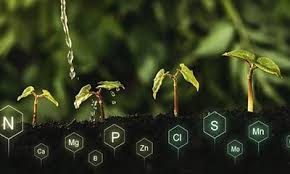
Dr. Kancheti Mrunalini Scientist at the ICAR-Indian Institute of Pulses Research, Kanpur, Uttar Pradesh) For decades, the story of Indian agriculture has been one of intensive growth, but this progress has come at a hidden cost to our most precious resource: the soil. Today, as we face the dual challenges of a growing population and.